
Subsidiaries
Global
Home Industry Solutions Subsea Observatory System Solution
Subsea Observatory System Solution

Contributing to the Ocean, Dedicating to National Defense

Subsea Observatory System Solution
Overview
Three Major Observation Networks
Core Equipment Highlights
Benchmark Projects
Technical Advantages
Application Fields
Overview

The Subsea Observatory System is an in-situ seabed observation network featuring systematic high-speed communication and power supply from shore stations to the deep seabed. Having undergone over a decade of operational validation in international subsea networks, it has proven to be highly reliable and practical. It has now been fully localized and possesses complete independent intellectual property rights.


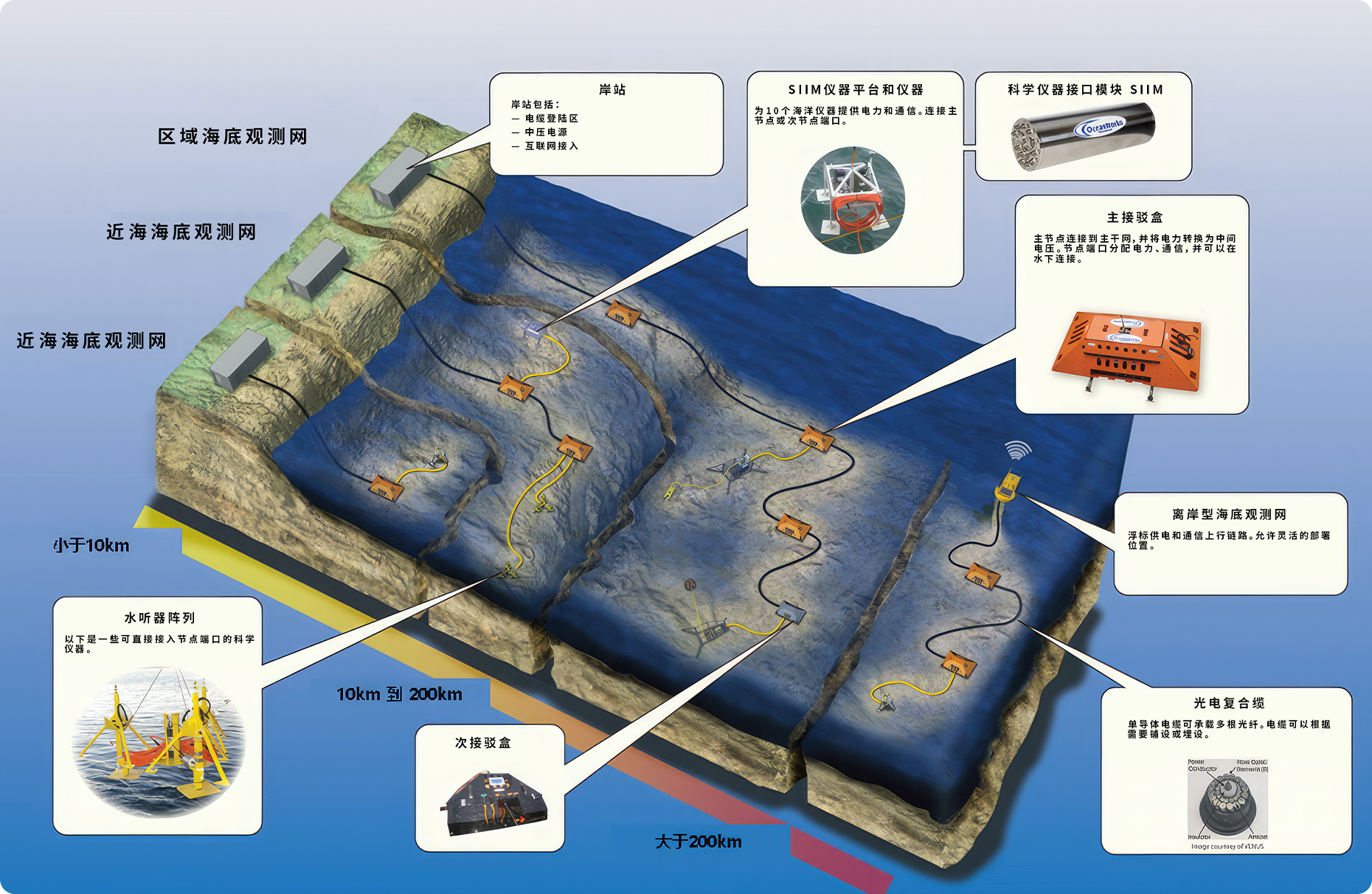
The Subsea Observatory System consists of shore stations, primary nodes, secondary nodes, SIIMs (Sensor Interface Instrument Modules), and scientific instruments. Utilizing a cabled observation network array, it enables long-term, uninterrupted, multi-parameter, and wide-area monitoring of specific waters, providing scientific data for underwater security, offshore oil and gas development, scientific research, and other marine applications.


Three Major Observation Networks
Nearshore Observation Network
A small observation network close to the coast
It can be deployed by small vessels, uses standard telecommunication cables or lightweight cables, and can support 10–50 instruments operating near a node.
Offshore Observation Network
A medium-sized observation network composed of multiple nodes
It can be arranged in linear, tree, or ring topology; nodes provide power and communication for instruments, and instruments are no more than 10 km from secondary nodes.
Regional Observation Network
An observation network deployed over a large regional area
It can be arranged in linear, tree, or ring topology; each node provides stable power and communication, and instruments are no more than 10 km from secondary nodes.
Core Equipment Highlights
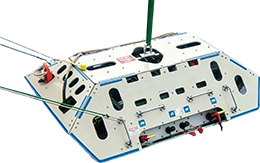
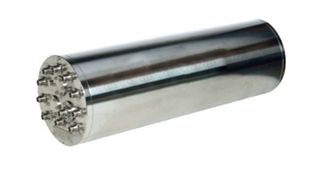
NODE-3000 Primary Junction Box
Connects up to six devices/SIIMs. Four interfaces can be software-switched between 375 V high-power supply and 12–48 V low-voltage supply. Equipped with intelligent circuit breakers and line insulation monitors, it automatically powers off and isolates abnormal ports, with redundant core components.
MVC-3000 Medium-Voltage Converter
Designed for long-distance underwater power supply, it features overvoltage protection, wide-voltage input, and automatic startup, with millisecond-level response to load changes. Line insulation monitoring supports alarms and controlled shutdown to prevent stray-current corrosion.
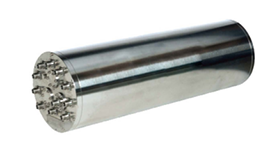
SIIM-3000SC Instrument Interface Module
Provides 10 software-configurable interfaces (8 low-voltage 12–48 V ports and 2 high-voltage 375 V ports), supports Ethernet/multi-serial-port protocols, and offers independent port power supply and insulation monitoring. Instruments can be replaced or added without retrieving the equipment.
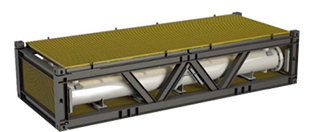
UPS-3000SC Uninterruptible Power Supply
Operates at depths of up to 3,000 m and is configured with a 150 kWh redundant battery pack with intelligent monitoring and charging functions. Redundant key components provide continuous power during outages, with a design life of 25 years and a battery maintenance cycle of 5–10 years.
Classic Cases
Canada VENUS Project
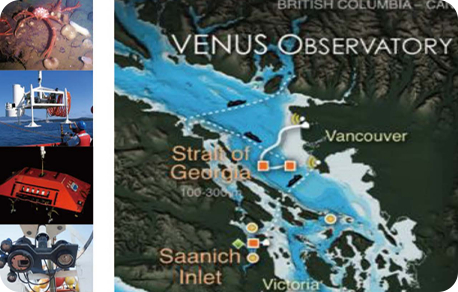
A permanent subsea observation facility built for the University of Victoria in Canada, with a design life of 20 years. It includes 3 primary nodes and 7 SIIM modules, operates at a water depth of 350 m, and has nodes 30–40 km from shore. It has continuously provided real-time observation data since 2006.
20 Years

Design Life

7 Units

SIIM Modules

350 m

Operating Depth

Canada NEPTUNE Project
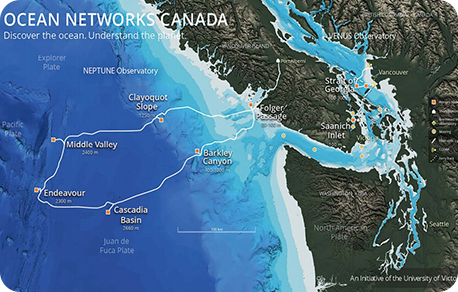
The world’s first regional subsea observatory network, with an 800 km cable loop and 5 primary nodes. Highlander supplied 14 configurable junction boxes, each supporting 10 sensors and 10 kW power management, suitable for operations at 3,000 m water depth.
800 km

Total Cable Loop Length

14 Sets

14 Configurable Junction Boxes Supplied by Highlander

Technical Advantages
Full-Link Redundancy
Triple assurance for power supply, communication, and core control ensures strong system stability
Deep-Sea Adaptability
Equipment supports 3,000 m water depth, with titanium alloy pressure housings and dual O-ring seals
Flexible Adaptability
SIIM ports are software-configurable, enabling expansion and upgrades without retrieval
Long Life and Low Maintenance
Core equipment has a design life of 20–25 years and long maintenance intervals
Internationally Proven
Deep participation in global benchmark projects demonstrates mature and reliable technology
Application Fields
Applications cover military use, scientific research, subsea seismic monitoring, offshore oil and gas, and other marine fields. Services include subsea system engineering solution design, engineering construction, equipment manufacturing, and project management.
Partner with Highlander, building an integrated ocean monitoring system
From monitoring and sensing to information platforms, empowering the full chain of marine management, protection, and resource development
* You can also contact us through our dedicated hotlines for marine instruments and equipment, and submarine network products
Marine Instruments and Equipment: 13601709553
Submarine Network: 18368081047