
A. ARCHITECTURE
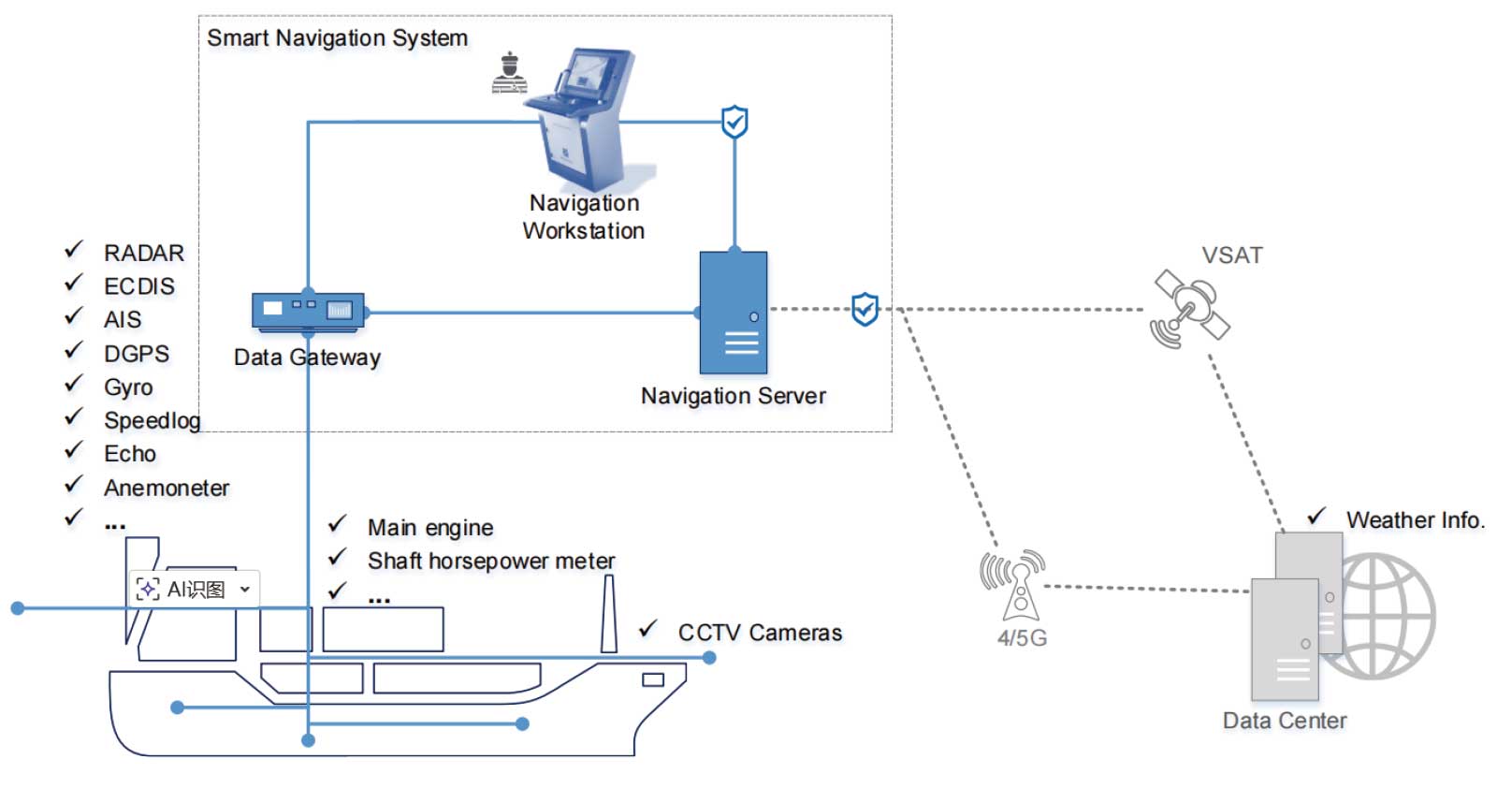
The intelligent navigation system provides route optimization, enhanced lookout and assisted collision avoidance functions.
The system optimizes routes according to electronic charts, weather and sea conditions, as well as voyage plans; enhances environmental awareness through data fusion technology; the perception and recognition technology is used to enhance lookout and assist collision avoidance, maintain ship-shore coordination, timely synchronize meteorological and navigation information, as well as decision-making suggestions, and provide an overall intelligent navigation scheme integrating ship-shore.
The data accessed by the system include: radar echo signal from ship end, ARPA target, route information of electronic chart, AIS, position, heading, heading, ground/water speed, water depth, draft at four corners, wind speed and direction, power and speed of main engine, power and speed of shaft, lookout camera, and meteorological and sea state information from shore end, etc.

B. FUNCTIONS
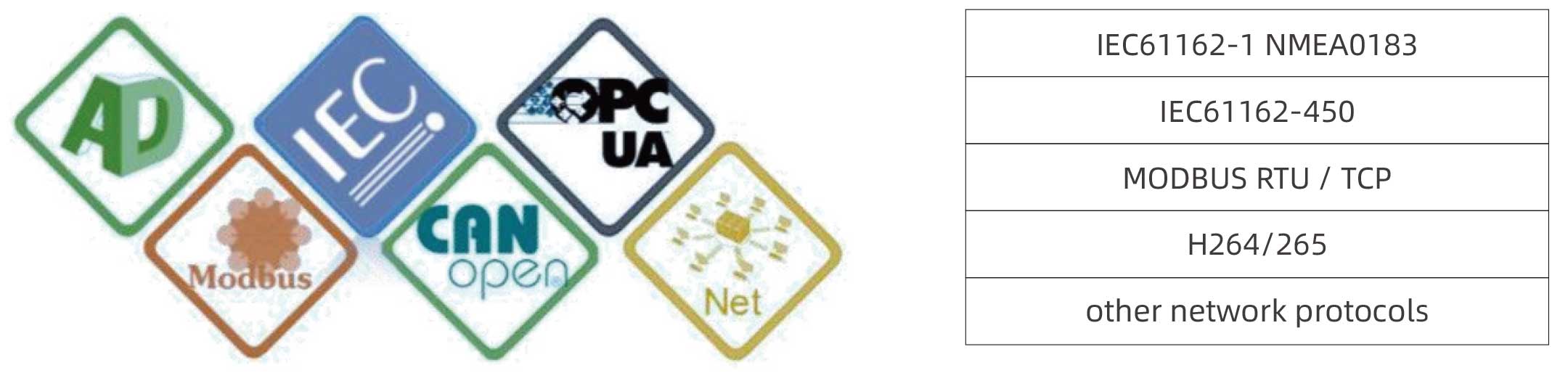
The system is compatible with a variety of sensor data acquisition protocols and supports second level data acquisition.
The system supports data cleaning, calibration and standardization, and periodically evaluates data quality (including data continuity, integrity, rationality, etc.).

Route optimization
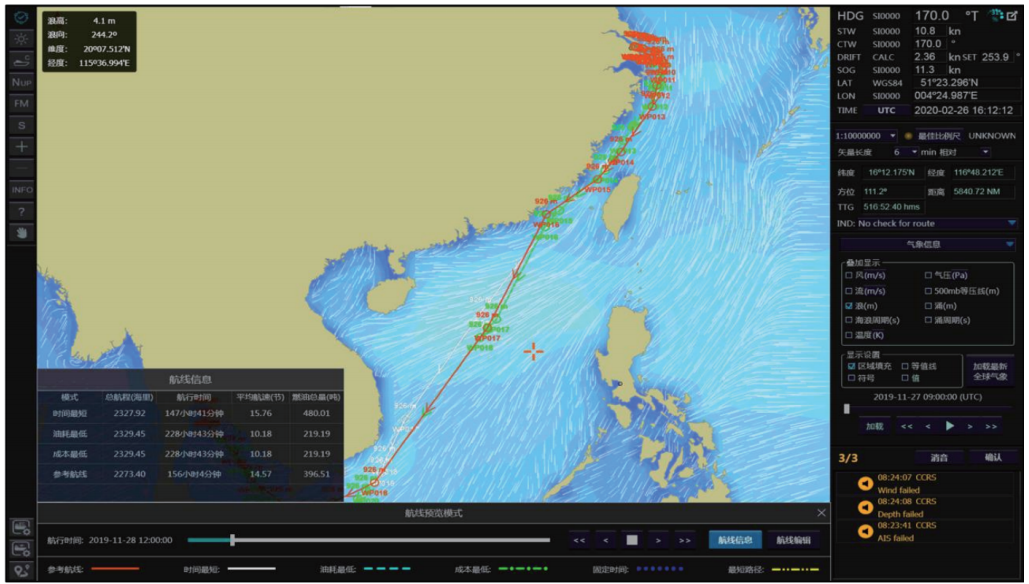
The system supports four route optimization modes: shortest time, lowest fuel consumption, lowest cost and fixed arrival time.
After setting the starting port, destination port and estimated time of arrival, the crew selects one or more optimization modes, and the system automatically plans and optimizes the route according to the meteorological sea conditions along the way. The optimized route can be sent to the electronic chart of the navigation system for track control.
· The system supports route optimization in strait and other waters.
· The system supports the safe setting of the ship's anti-wind and wave level, and provides safe and navigable optimization results combined with the meteorological sea conditions.
· The system supports early warning of severe weather conditions such as typhoons.

Assistance collision avoidance
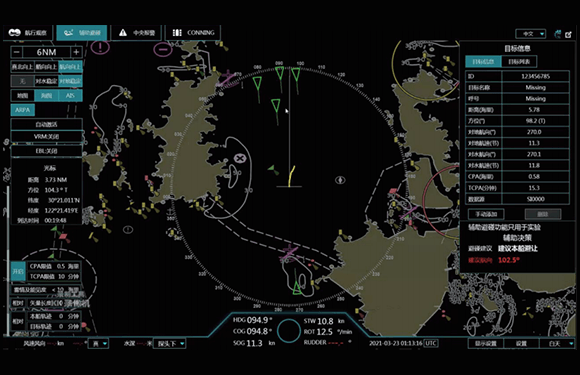
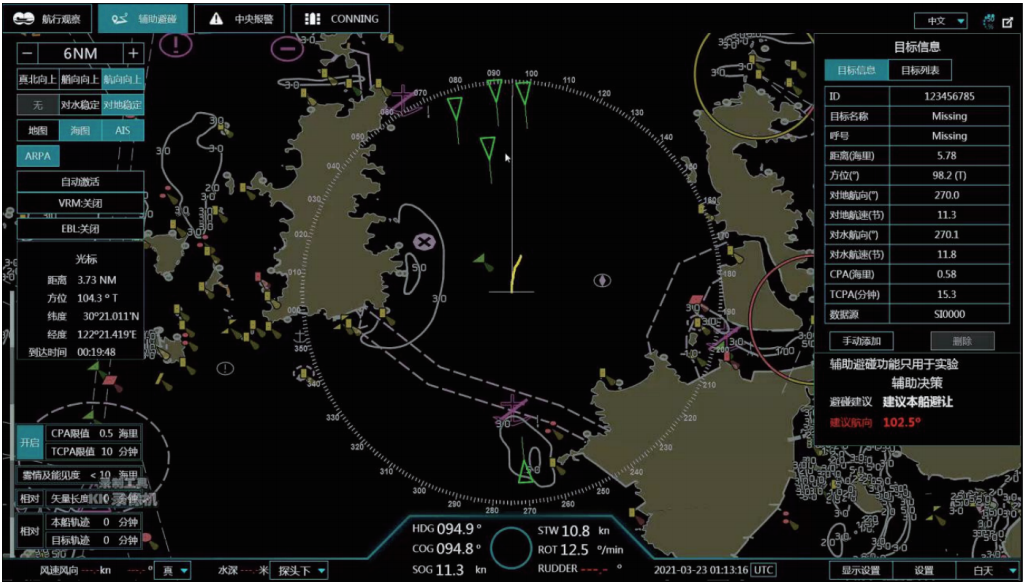
· The system can analyze the radar target automatically, find the dangerous target automatically, and give the collision avoidance suggestions in accordance with the international collision avoidance rules.
· The system supports analysis and decision-making of more than ten dangerous targets in open and restricted waters.
· The system supports the superposition of chart and radar, and can give comprehensive collision avoidance suggestions based on environmental factors such as shoreline.
· The system supports the suggestion of resuming traffic after collision avoidance.

Assistance Lookout
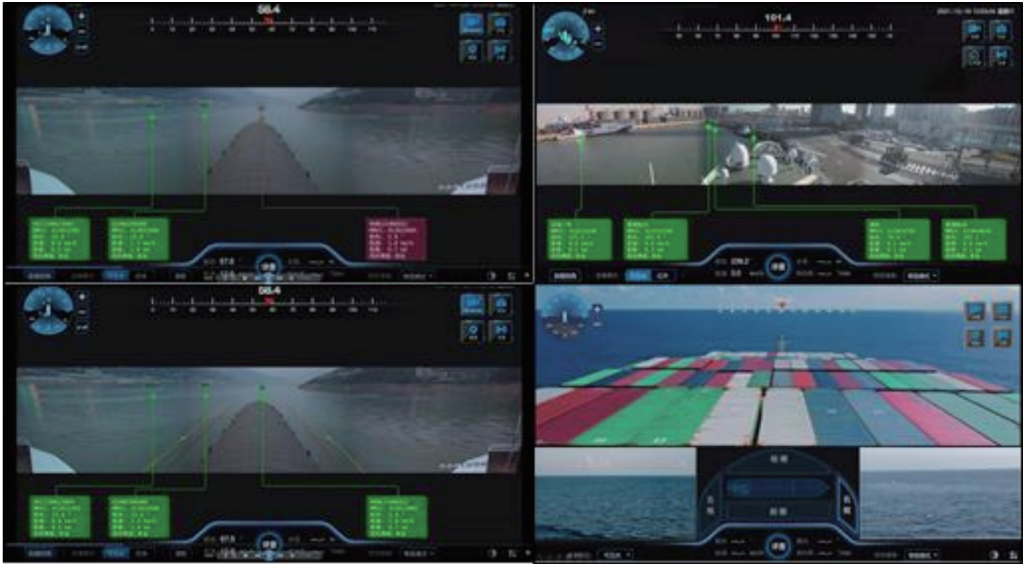
The system accesses the video images of the cameras deployed around the ship, carries out target identification on the video images, and integrates with multi-source target data such as radar and AIS to provide target and information matching and dynamic superposition, so as to enhance navigation observation.
· The system supports a wide viewing angle of 180° horizontal.
· The system supports the identification of moving and static objects, such as ships, beacons, piers, etc.
· The system supports collision risk assessment and warning of surrounding ships.
· The system supports audio broadcast to remind crew to pay attention to collision risk.
· The system supports navigation assistance to assist the crew to judge the distance near the target.

| Data acquisition unit: Supports data collection on interfaces such as I/O, A/D, CAN, MODBUS RTU/TCP, NMEA 0183, and OPC-UA | Core switch: Full gigabit, 24 ports | Firewall |
| Intelligent navigation workstation: HLD-MCU600 | Awareness server: 8-core CPU, 16G MEM, 256G SSD, 24" display | Lookout camera |
| HLD-SNS600: Route optimization, collision avoidance assistance, enhanced lookout |