
A. ARCHITECTURE
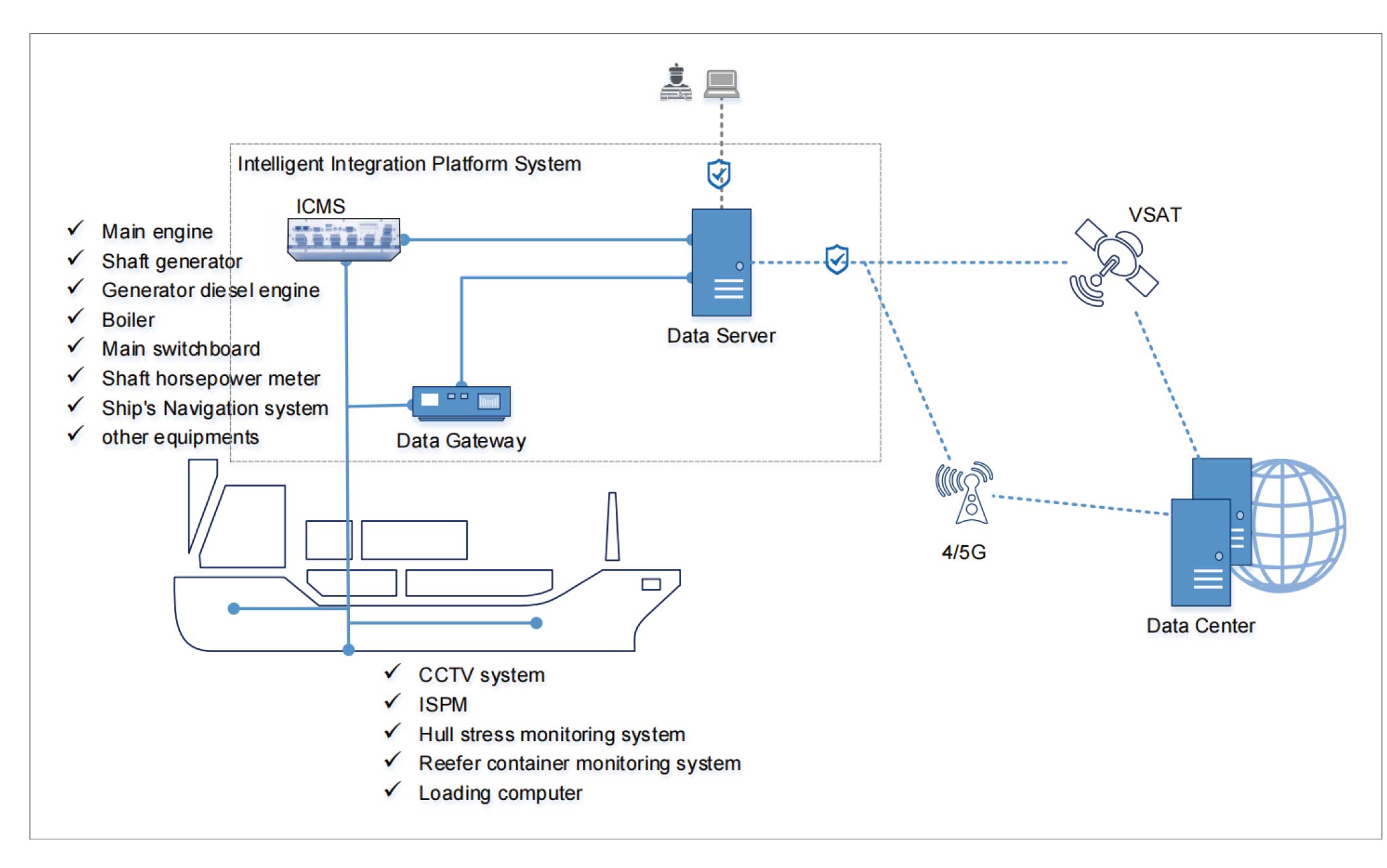
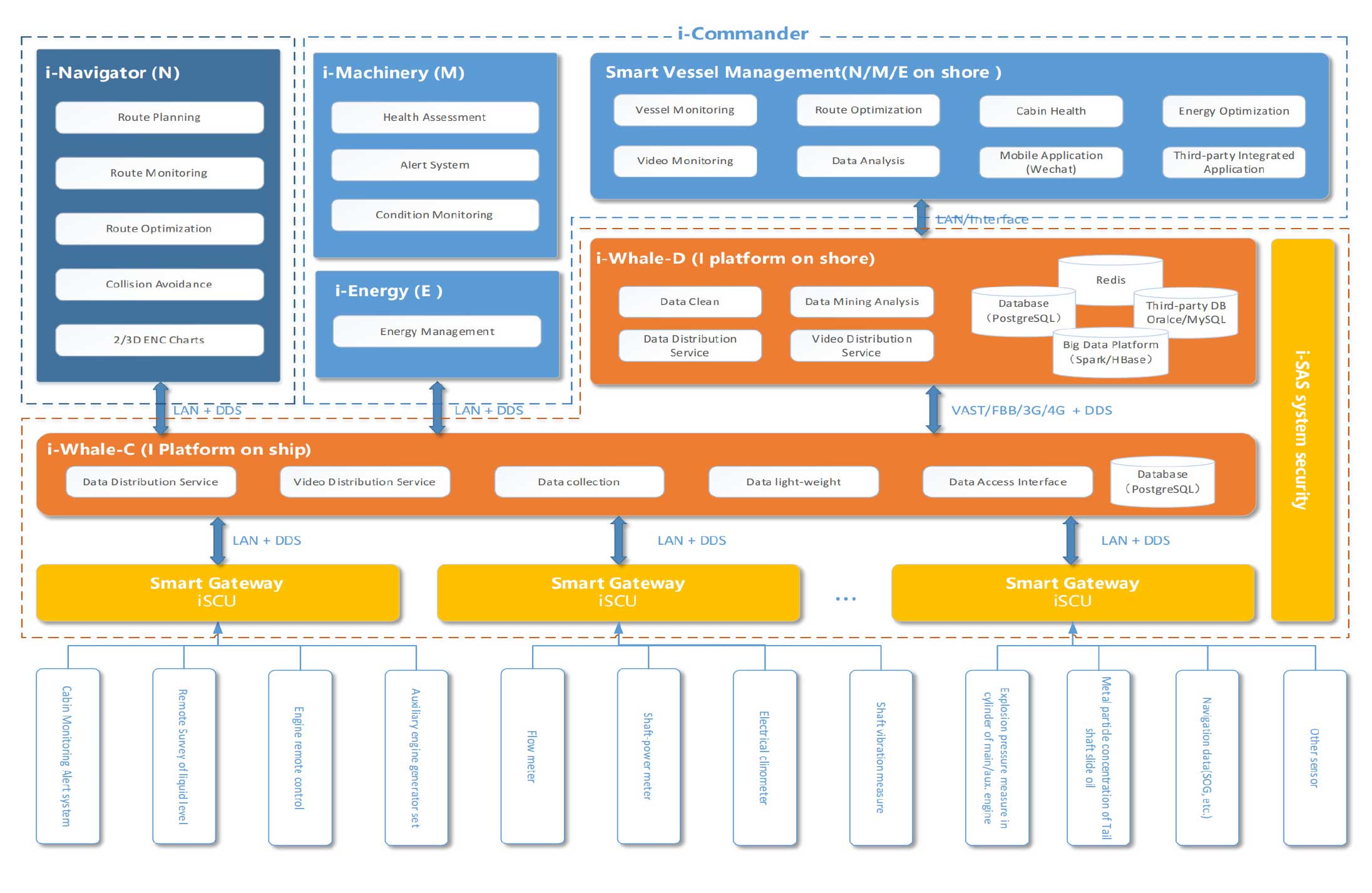
The intelligent integrated platform system includes ship LAN, data acquisition subsystem, and equipment operation monitoring subsystem.
Marine LAN provides efficient network environment, and connects with VSAT and 4/5G system through firewall to provide secure ship-shore communication.
The system collects data through ICMS system and data gateway. Support main engine, generator, shaft generator, boiler, main switchboard, integrated control and monitoring system, shaft power meter, CCTV, AIS, GPS navigation system, loading computer, etc.

B. NETWORK
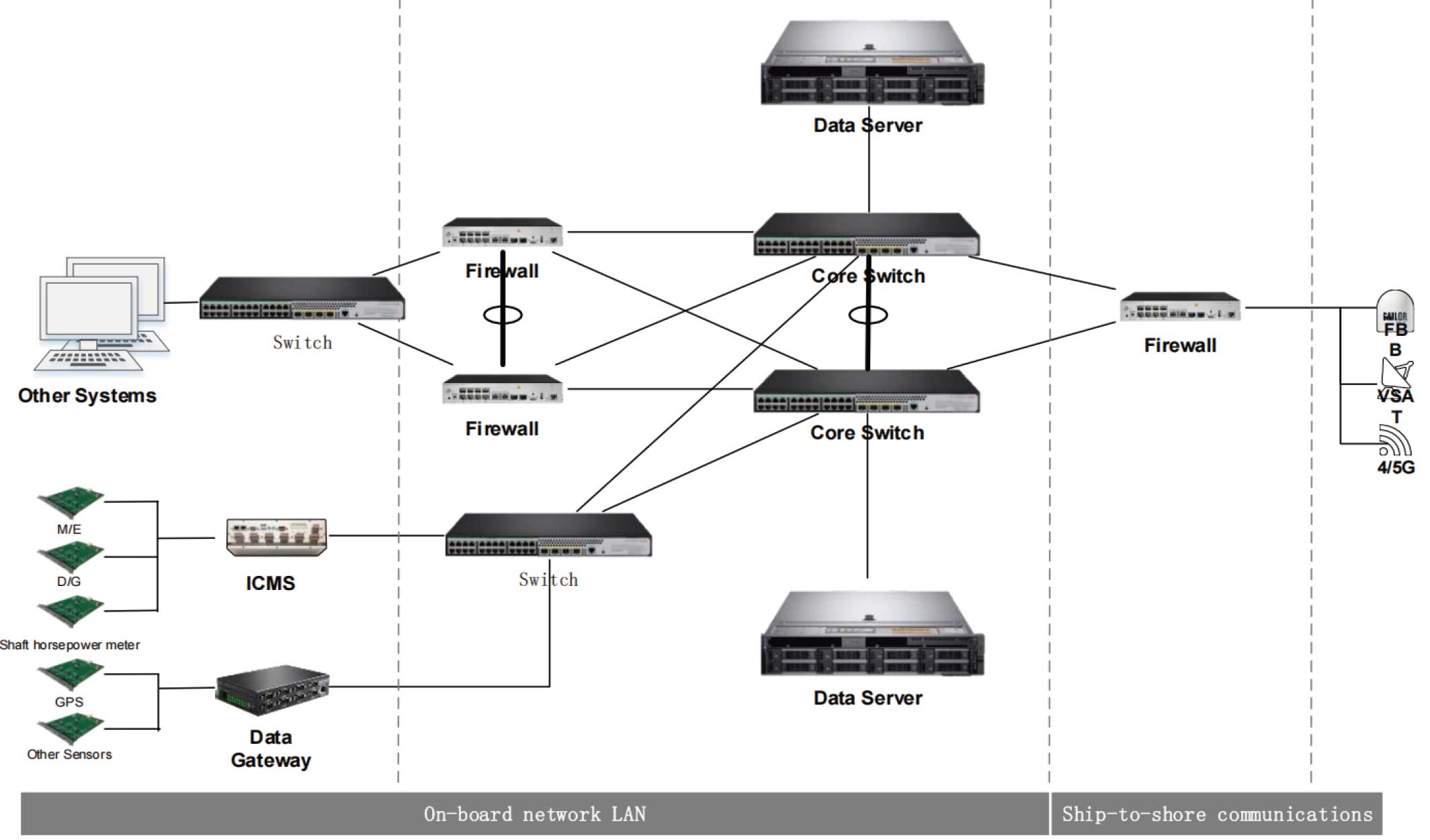
The network of intelligent integration platform is composed of core switches, firewalls and data servers. Combined with data gateway devices, it can access different devices and automatically collect data. Can connect VSAT system, through the firewall and data encryption technology, for ship-to-shore data transmission to provide a secure data link.
The system supports expansion and upgrading of the dual-redundancy network. After the upgrade, the single point of failure does not affect the normal running of the overall service, ensuring service continuity.

C. FUNCTIONS
·The integration platform adopts open platform architecture and microservice technology, compatible with various databases (Oracle, MySQL, PostgreSQL), and supports function expansion and distributed deployment.
·The system adopts advanced modular design, including data acquisition module, data processing module, data monitoring module, ship-shore data transmission module and so on.
·The system provides real-time monitoring function and supports single sign-on (SSO), which makes the system more secure.
·The system supports operations in both Chinese and English to meet the user's usage habits.
·The system supports encrypted data transmission.
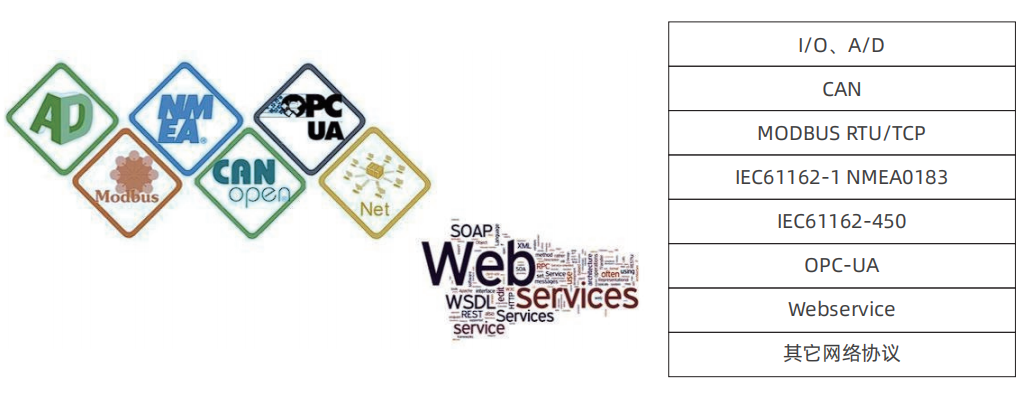
·Support integration with third-party systems, compatible with a variety of data interface protocols:


Data processing
By expanding the acquisition module, the system can support the parallel collection of a large number of equipment conditions, and carry out standardized data processing.
·Support second-level data acquisition of equipment working condition information.
·Support data cleaning, data standardization, and periodic evaluation of data quality (including data continuity, integrity, rationality, etc.).
·The ship-to-shore transmission frequency can be adjusted according to the actual network bandwidth, and the minimum granularity supports the second level.
·Support intermittent transmission of historical data.
·Support data lightweight and encryption processing, and realize data compression rate of less than 5% per second; Data compression rate is less than 1% every 5 minutes.
·Estimated with 1000-second analog volume data, ship-shore synchronous real-time data and historical data, saving storage capacity and ship-shore transmission bandwidth of about 1.6TB per year. Saving storage capacity and ship-shore transmission bandwidth of about 1.6TB per year.
·The ship-end data center can store the hot data for 2 years, which can be stored automatically and circularly; The landing data will be stored permanently.
Monitoring
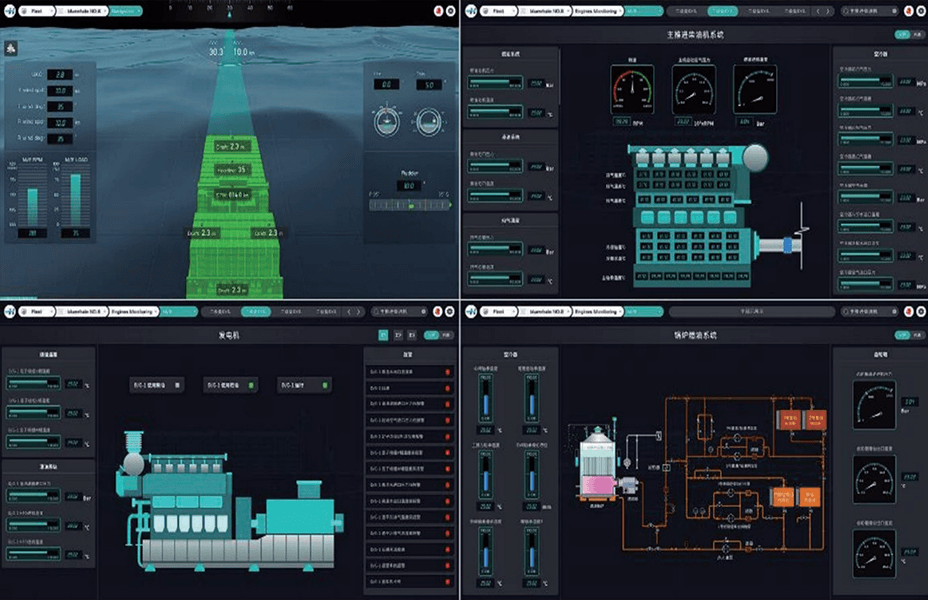
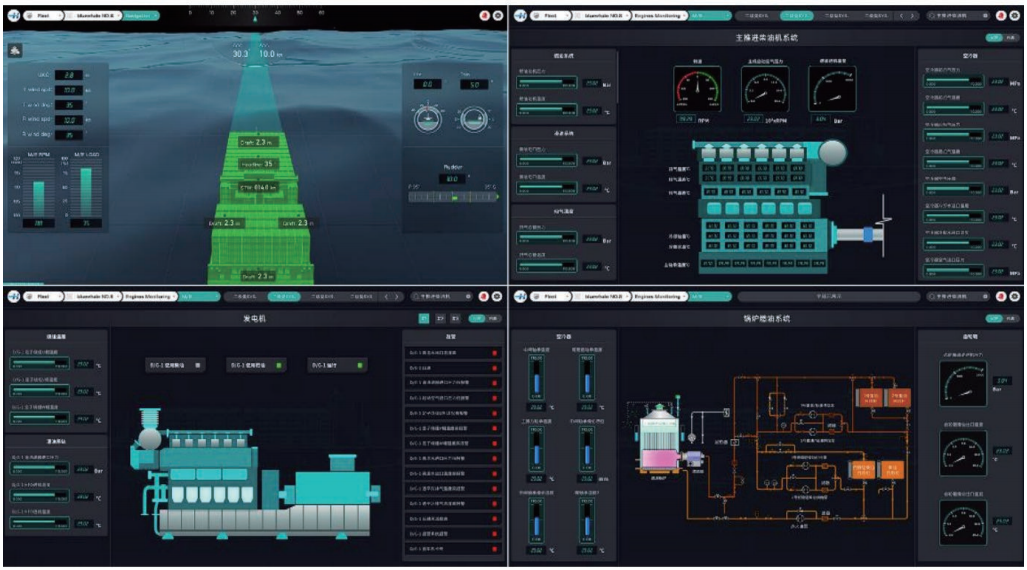
The system uses MIMIC, dashboard and other visual display forms, support English and Chinese, can real-time monitoring of the ship's navigation conditions, as well as equipment operating conditions, and provide customized display pages approved by customers.

| Data acquisition unit: Supports data collection on interfaces such as I/O, A/D, CAN, MODBUS RTU/TCP, NMEA 0183, and OPC-UA | Firewall: Intrusion monitoring and defense, anti-virus, anti-leak, anti-DDOS, anti-spam, VPN, log audit, with multi-link switch module | Core switch: Full gigabit, 24 ports |
| Data server: 10-core CPU, 32G MEM, 480G*3 SSD |
| Intelligent Integrated Platform System (HLD-DIP600): Data acquisition, storage, encryption, ship-shore communication, equipment real-time monitoring |