CCTV2 Finance | Exploring the World's First Offshore Wind-Direct-Connection Undersea Data Center
The AI wave is sweeping the globe, and computing power has become a critical foundation of productivity. At the endpoint of computing power lies electricity. To forge a green, intensive, and sustainable path for computing power development, China's computing infrastructure enterprises have taken a bold detour — building data centers under the sea.
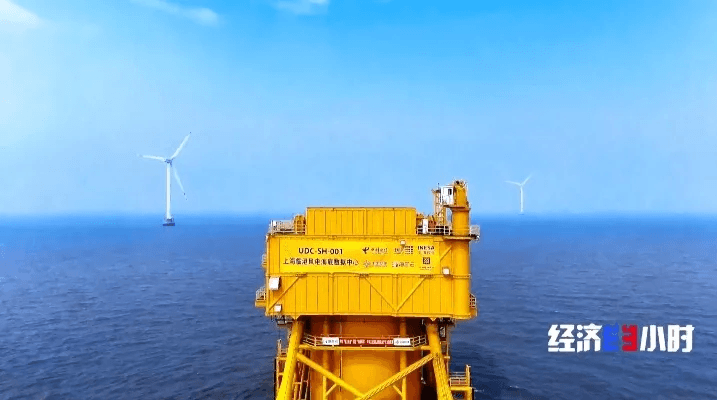
What are the advantages of placing a data center underwater? And what challenges were overcome during its construction? Join our reporter as we head out to sea to find out.
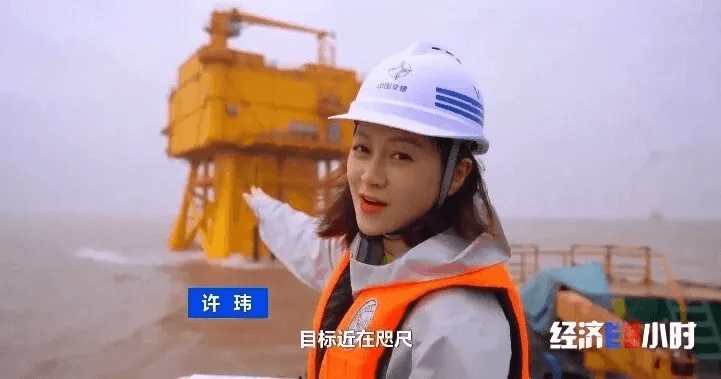
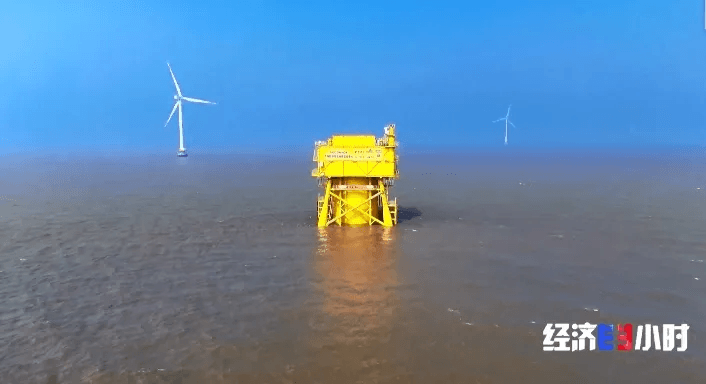
In the East China Sea waters east of Xiaoyangshan in Shanghai's Lingang area, an offshore platform rising more than 20 meters above sea level is strikingly eye-catching. This is the world's first operational offshore wind-direct-connection undersea data center, with a total investment of 1.6 billion yuan, a planned overall capacity of 24 MW, and a Phase 1 demonstration project with an installed capacity of 2.3 MW and a total weight of 1,950 tonnes — equivalent to roughly 1,300 family sedans.
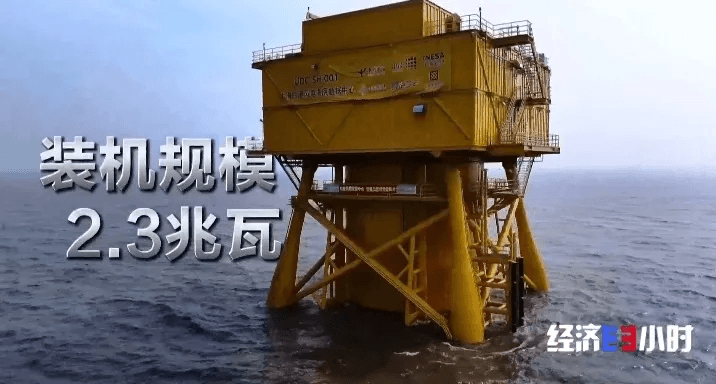
The undersea data center is situated at a depth of 10 meters and features four layers of server cabinets, each spanning an area of approximately 160 square meters.
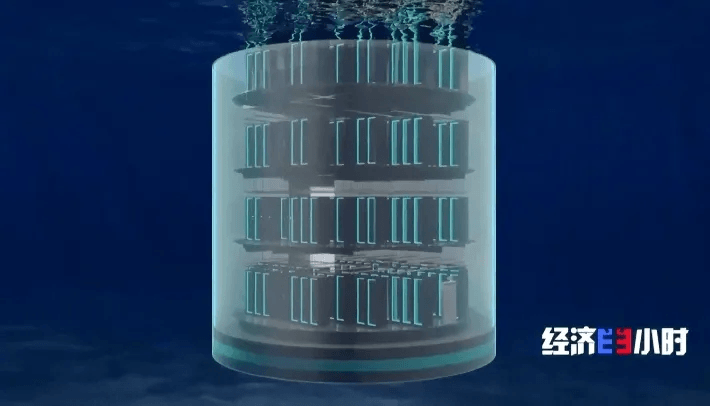
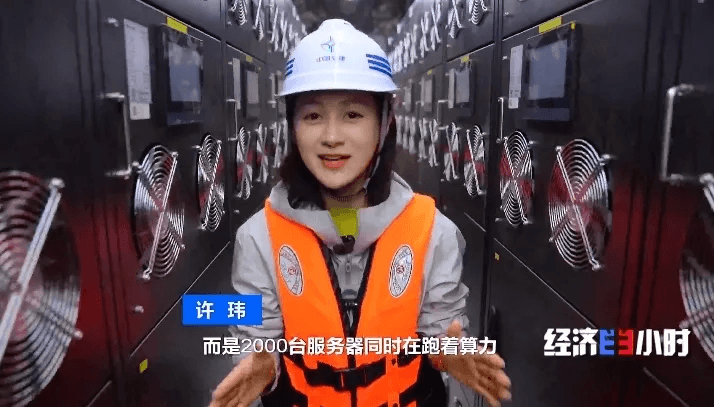
Inside the undersea data center server room are 192 cabinets, each with a power rating of around 12 kW. Thousands of servers operate continuously in the deep sea, supporting the computing power demands of daily internet and AI applications.
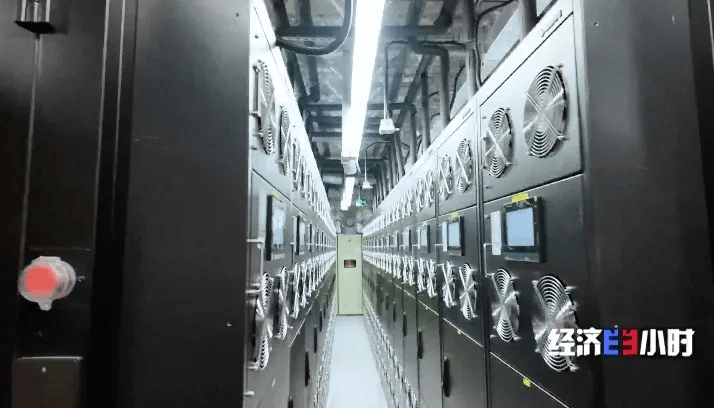
Submerging a data center into the sea is an innovative attempt to solve the enduring problems of land-based data centers: high electricity consumption, high water consumption, and a large land footprint. Conventional data centers use around 40% of their electricity for cooling, but the average annual water temperature in these waters is only 15°C — making the sea itself a natural heat dissipator.
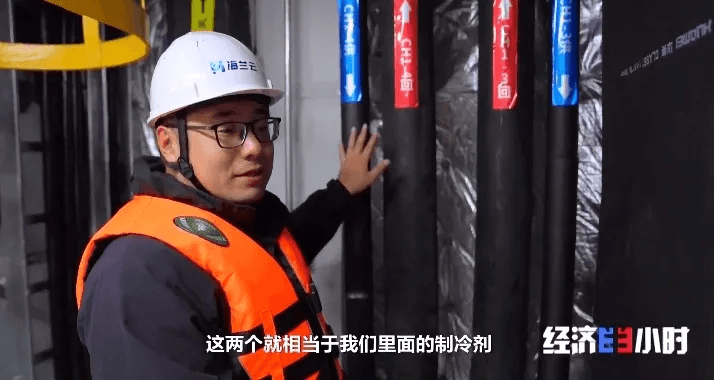
Project leader Chen Xiyi has done the calculations: if this 2.3 MW undersea data center were cooled with fresh water in the traditional manner, it would consume 40,000 tonnes of fresh water annually — roughly equivalent to a hundred years of consumption for an average household. Instead, the project employs a passive refrigerant circulation system that uses seawater as the cooling source to carry away server heat, achieving zero fresh water consumption.

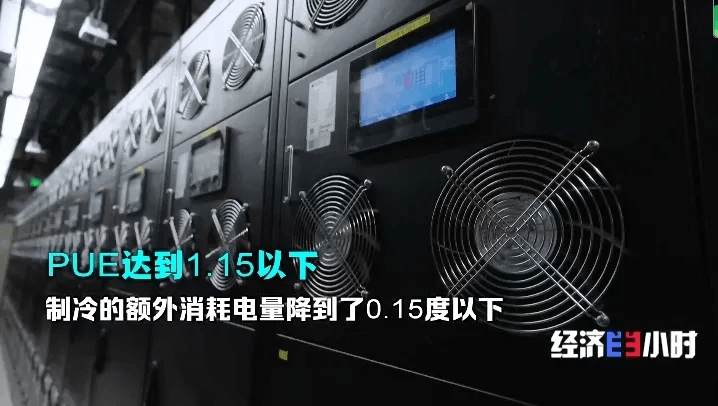
The core metric for measuring a data center's energy efficiency is PUE (Power Usage Effectiveness). The closer this value is to 1, the higher the energy utilization efficiency. A land-based data center typically has a PUE between 1.4 and 1.6. This undersea data center achieves a PUE below 1.15.
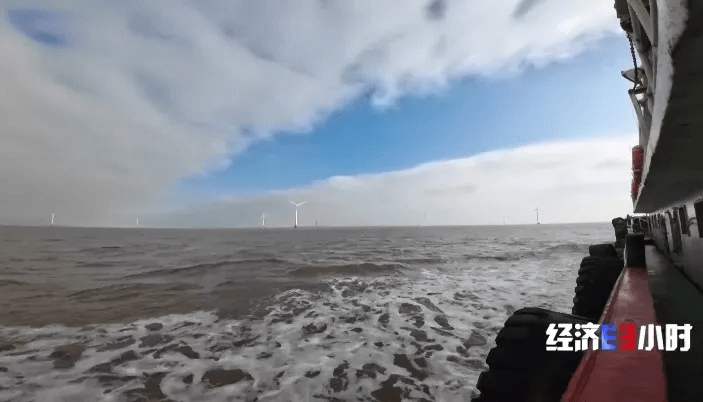
Some 500 meters away from the undersea data center, over 50 wind turbines stand tall. This 200 MW offshore wind farm generates more than 500 million kWh of electricity per year. The steady stream of green energy from here serves as the power source for the undersea data center.
A report released by the International Energy Agency (IEA) projects that by 2030, global electricity demand from data centers will more than double, with artificial intelligence becoming the single largest driver of this surge.
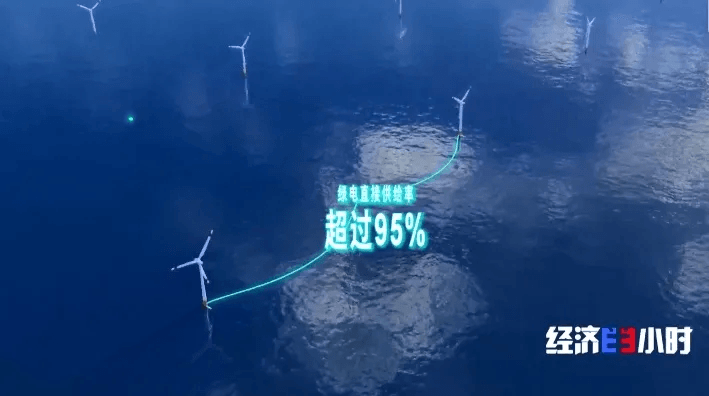
Here, electricity is delivered to the undersea data center via a composite fiber-optic power cable, with a direct green energy supply rate exceeding 95%. At full capacity, this will save 61 million kWh of electricity per year — equivalent to the annual CO₂ absorption of 1.6 million trees.

At the same time, land use is reduced by over 90%. The 2.3 MW installation requires only 200 square meters of land, far below the 2,000 square meters needed for a conventional land-based equivalent.
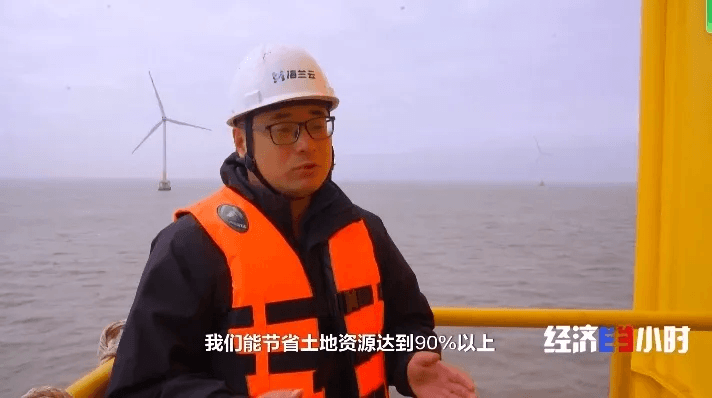
What we can see is merely the only above-water portion of this undersea data center. Beneath it lies a complex steel structure system.
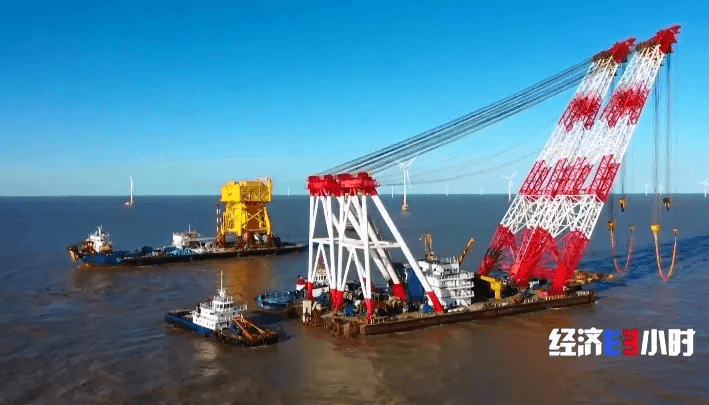
The waters off Shanghai's Lingang feature strong waves and high sediment content under challenging sea conditions. The construction team pioneered a "new structural configuration for undersea data centers," integrating and coordinating the assembly of all four core components, overcoming challenges such as integrated lifting and high-precision underwater positioning, and completing construction in just half a year.
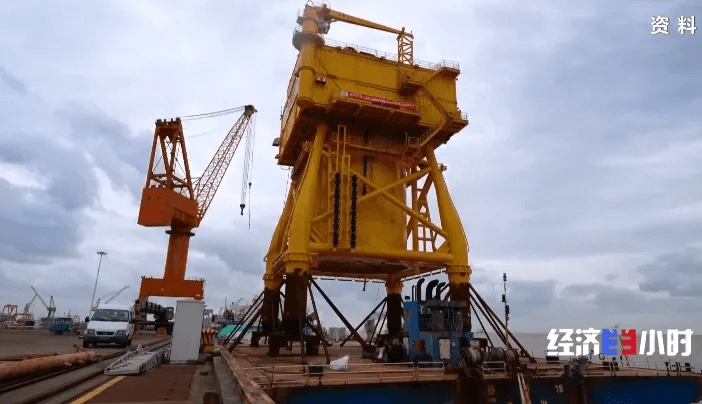
During the visit, the reporter's most striking impression was one of dislocation. What you see on the seabed is not marine life, but 2,000 servers running computing workloads simultaneously. Chances are, the video you just scrolled past or the image you just generated — the data behind it may well have come from here.
The first organization to connect to the undersea data center is a telecommunications company's AI computing center located just 10 kilometers from the offshore platform.
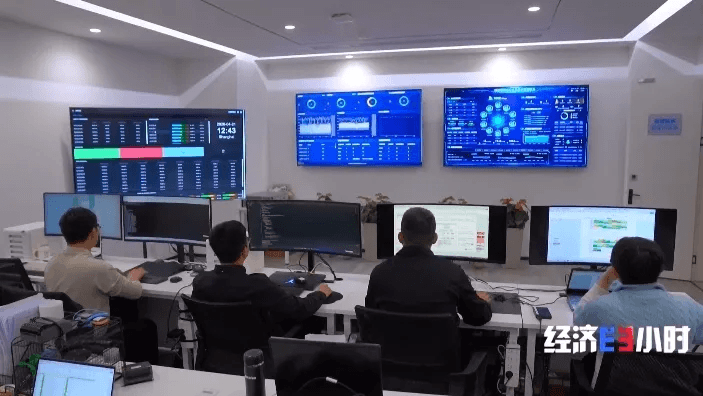
This telecom company uses the undersea data center as a critical supplement to its land-based computing infrastructure, building a sea-land coordinated computing power network.

According to project director Jiang Liu, the Lingang undersea data center holds another unique value — it is highly compatible with cross-border data requirements.
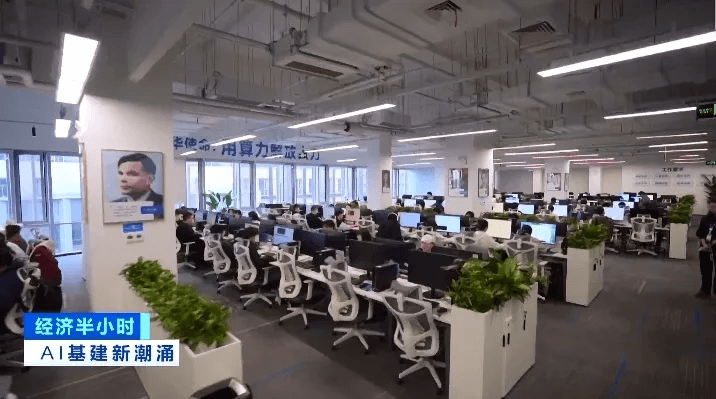
In a Shanghai office of a cross-border data service company, AI data processing engineers annotate video frames, one by one, on their computer screens. This is a world-model project spanning film, gaming, and other industries. In Lingang, such projects have a special name — laishu jiagong, meaning inbound data processing.

A data processing project of this kind demands enormous computing power. The company, established only two years ago, has already grown to a headcount of 300.
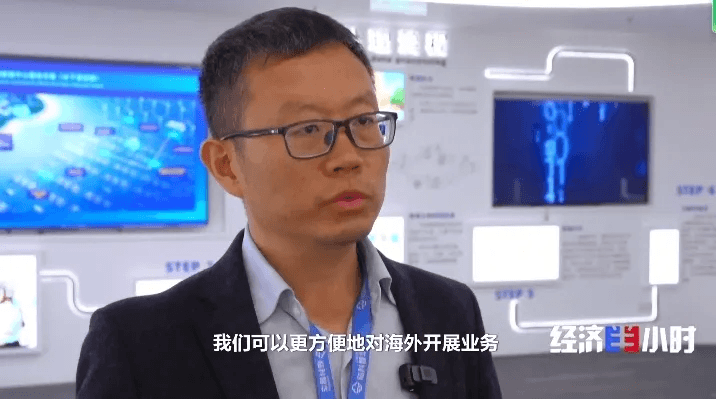
For cross-border data processing companies, the undersea data center offers lower energy consumption, lower latency, and lower costs — and is becoming an important cornerstone supporting their international business expansion.
The successful commercial operation of Shanghai Lingang's "offshore wind power + undersea computing" model has led the design and operations team to greenlight the opening of more undersea data centers. It is understood that they are now advancing the scaled deployment of 5–7 MW single-unit undersea data centers, with plans to establish multi-unit clusters in waters across the Yangtze River Delta, the Pearl River Delta, and the Bohai Rim. The 2.3 MW Lingang installation is merely the "tip of the iceberg" compared to the future nationwide rollout.

As the construction of large-scale, high-density intelligent computing facilities continues to advance, energy is set to become the critical bottleneck affecting intelligent computing development, and computing-power and energy synergy is precisely the key approach to breaking through this bottleneck. In the years ahead, more new technologies and new models will continue to emerge, accelerating the deployment of stable, green, and low-cost computing-power and energy synergy projects and building a solid foundation for the growth of the intelligent economy.
Article reprinted from: Economic Half Hour
Executive Producer: Du Yang
Producers: Chai Zhehong, Li Manwei
Managing Editor: Zhang Chao
Reporters: Xu Wei, Su Feng