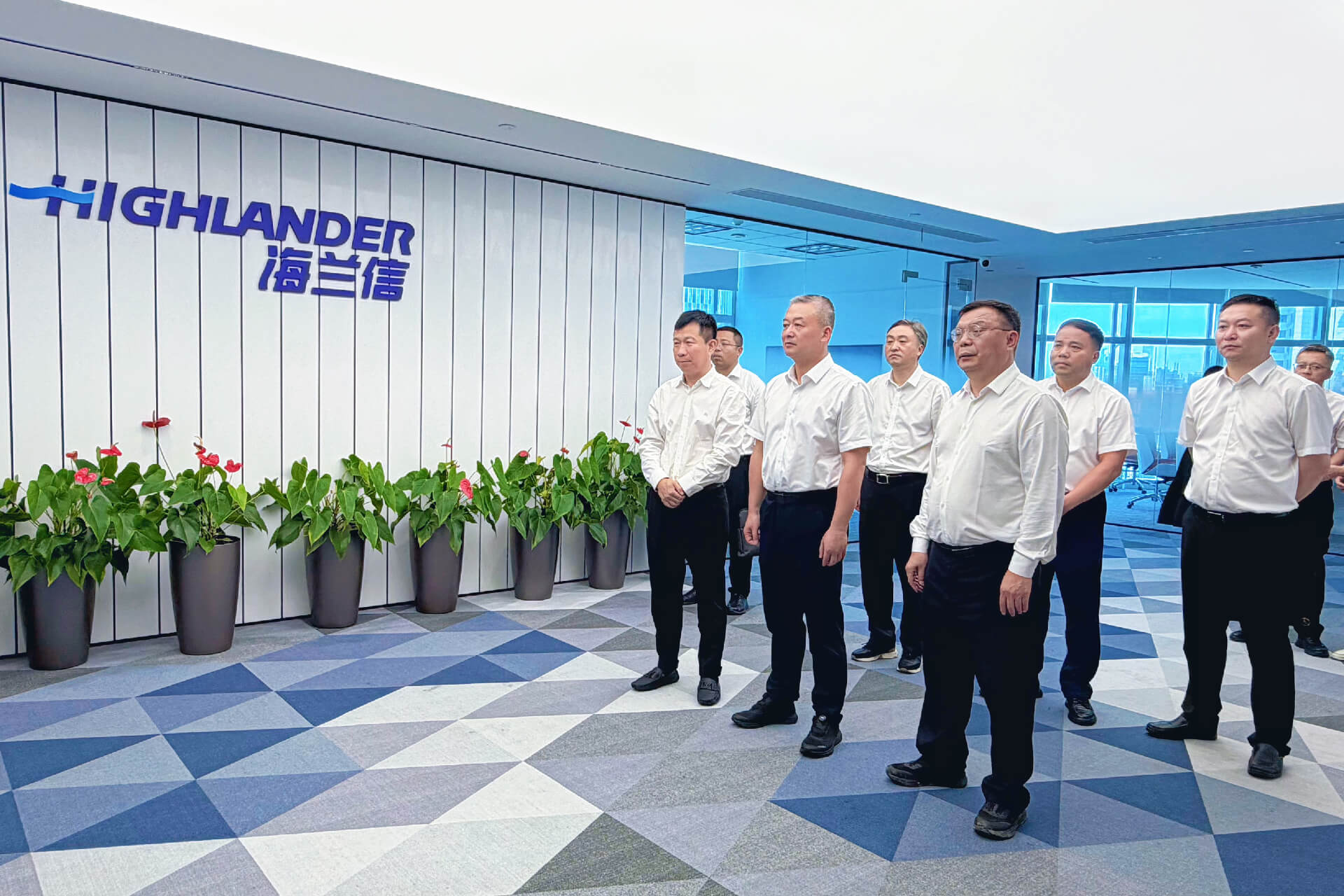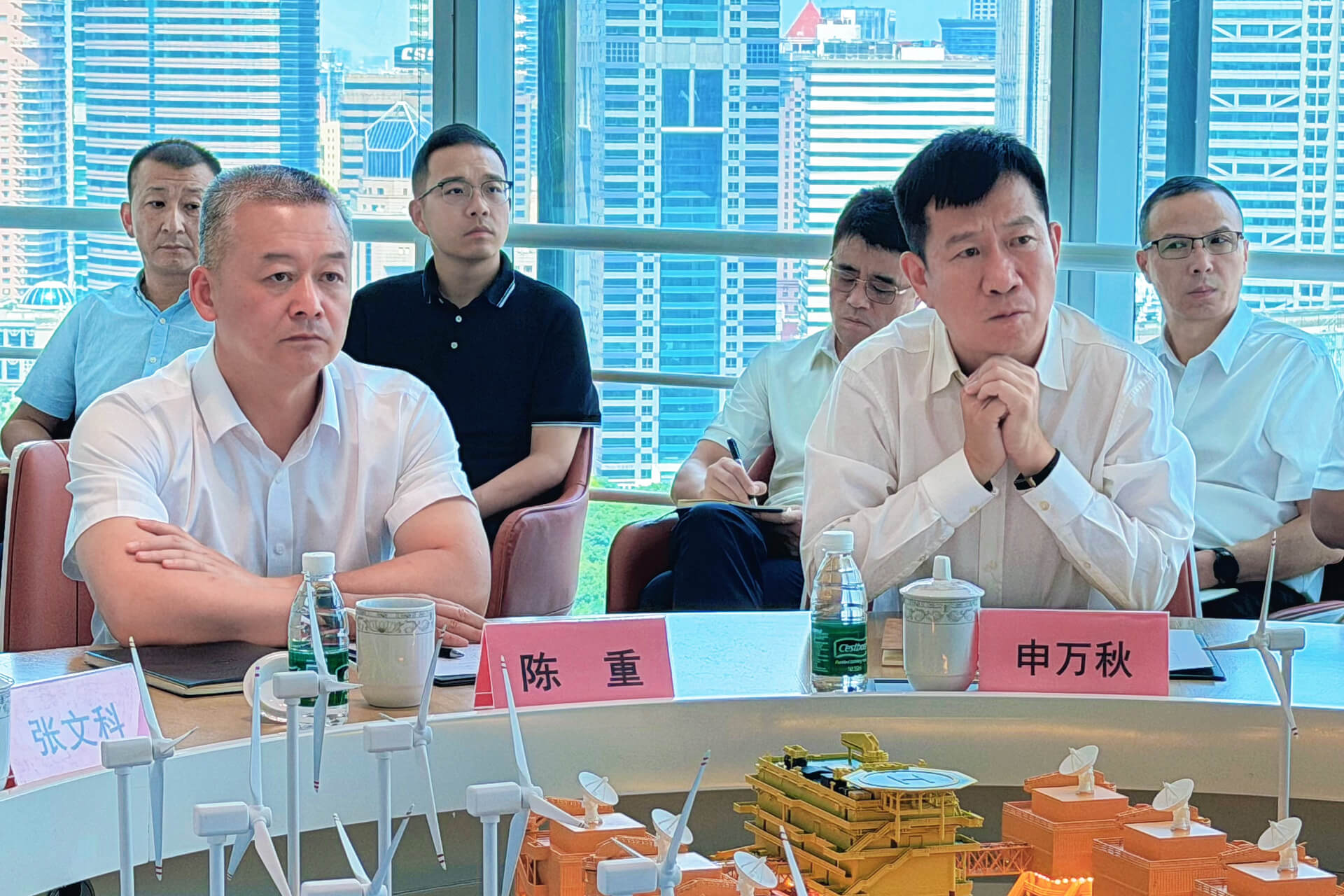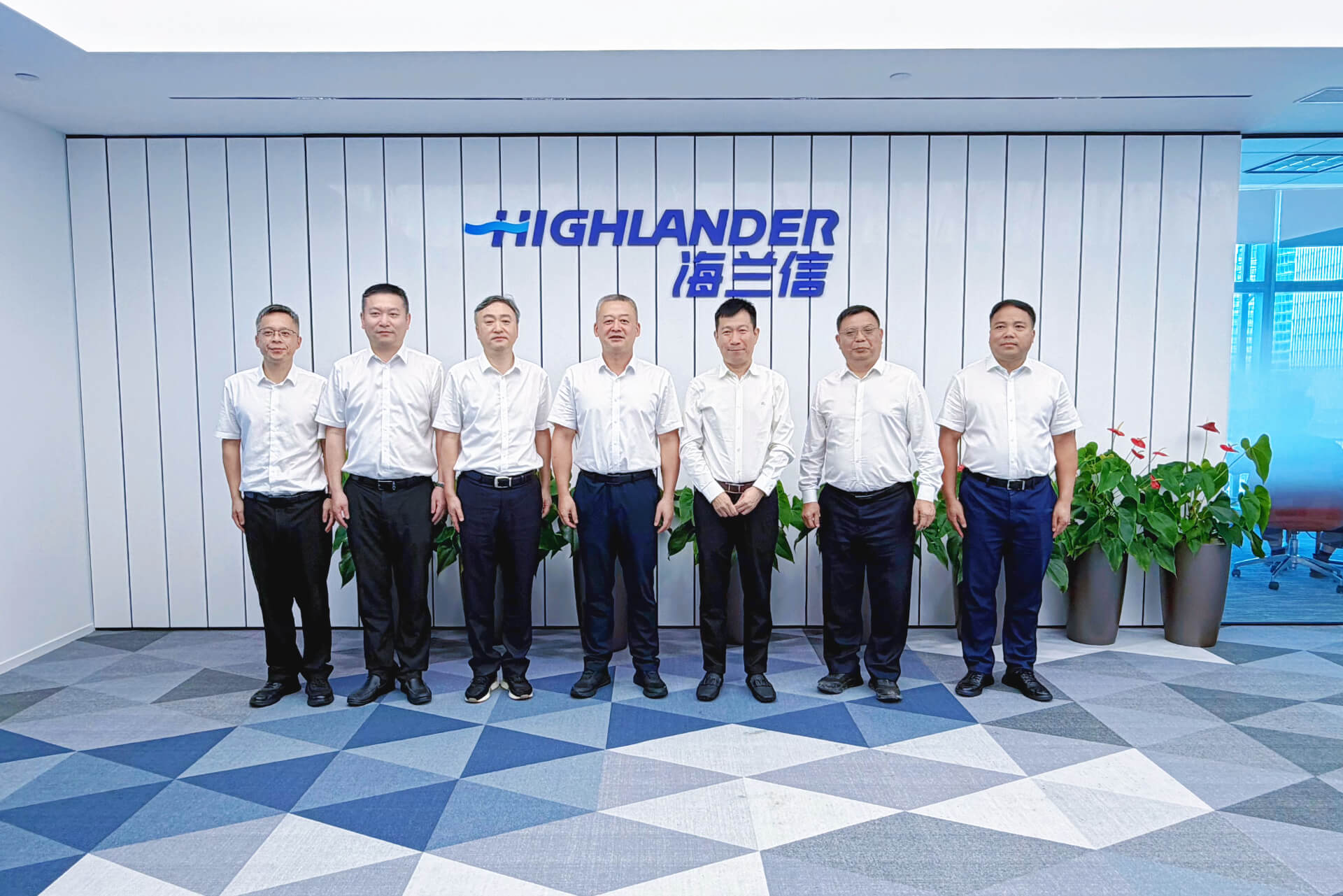

On the afternoon of July 7, Chen Zhong, Party Secretary of Zhoushan and Party Working Committee Secretary of the Zhoushan Archipelago New Area, led a delegation to visit and conduct research at Beijing Highlander Digital Technology Co., Ltd., holding in-depth discussions on the implementation of the UDC wind power submarine data center project in Zhoushan. Attendees included Highlander founder Shen Wanqiu, Strategic Capital Center General Manager Tang Tian, Operations Management Center Deputy General Manager Yao Ling, Shanghai Highlander Cloud Technology Co., Ltd. Project Development Center General Manager Pan Yahong, Product Director Tu Feilong, and CCCC Third Harbor Engineering Co., Ltd. Chief Accountant Zou Qiang.

At the start of the meeting, participants watched a corporate promotional film about Highlander, gaining a systematic understanding of the company's industrial footprint, technical expertise, and global business presence across marine technology and marine information technology. Founder Shen Wanqiu presented a dedicated pitch on the innovative wind power coupled submarine data center project, detailing the iterative R&D history of the first- and second-generation submarine computing pods. This model leverages idle clean energy from offshore wind farms to deploy data centers in deep-sea waters, using the natural constant temperature of seawater for low-carbon heat dissipation. Compared to traditional onshore IDCs, it offers outstanding innovative advantages in energy efficiency, land use, carbon reduction, and security protection, aligning with national policy directions for computing power going global and green low-carbon development. In light of growing domestic momentum for marine computing, Shen Wanqiu elaborated comprehensively on the project's mid-to-long-term technological iteration roadmap, industrial extension, and supply chain ecosystem development plans.

At the meeting, Pan Yahong, General Manager of the Shanghai Highlander Cloud Project Development Center, delivered a report on the overall operations of Highlander Cloud's business segments, with a detailed briefing focused on the preliminary research, proposal drafting, technical validation, and current-stage preparatory work for the Zhoushan submarine computing power project. Following the presentation, department heads from Zhoushan city agencies and leaders from CCCC Third Harbor took turns speaking, engaging in in-depth exchanges on key issues including the project approval process, maritime resource guarantees, engineering and construction conditions, and supporting policy frameworks — all grounded in Zhoushan's marine resource endowments, offshore wind power planning, and marine engineering conditions. They systematically sorted through key issues and explored pathways to implementation.
In his concluding remarks, Party Secretary Chen Zhong noted that submarine data centers represent a cutting-edge track where the marine economy and digital economy deeply converge — highly innovative, with broad development prospects, and well-aligned with Zhoushan's strategic goal of becoming a maritime powerhouse. He put forward three key points for the next phase of project advancement:
First, getting started is the bottom line. Government and enterprises should accelerate coordination, solidify preliminary work, and push for the project to break ground as soon as possible.
Second, scaling up is the real test of capability. Set sights on the 100 MW construction target and build a high-standard, benchmark-defining domestic offshore submarine computing power project.
Third, openness is the overarching principle. Adapt to the pace of technological iteration by advancing construction and optimization in parallel. Drawing on Zhoushan's unique resource endowments, government and enterprise should join forces to tackle technical challenges, cultivate the marine digital economy, and build a provincial-level green computing innovation hub.