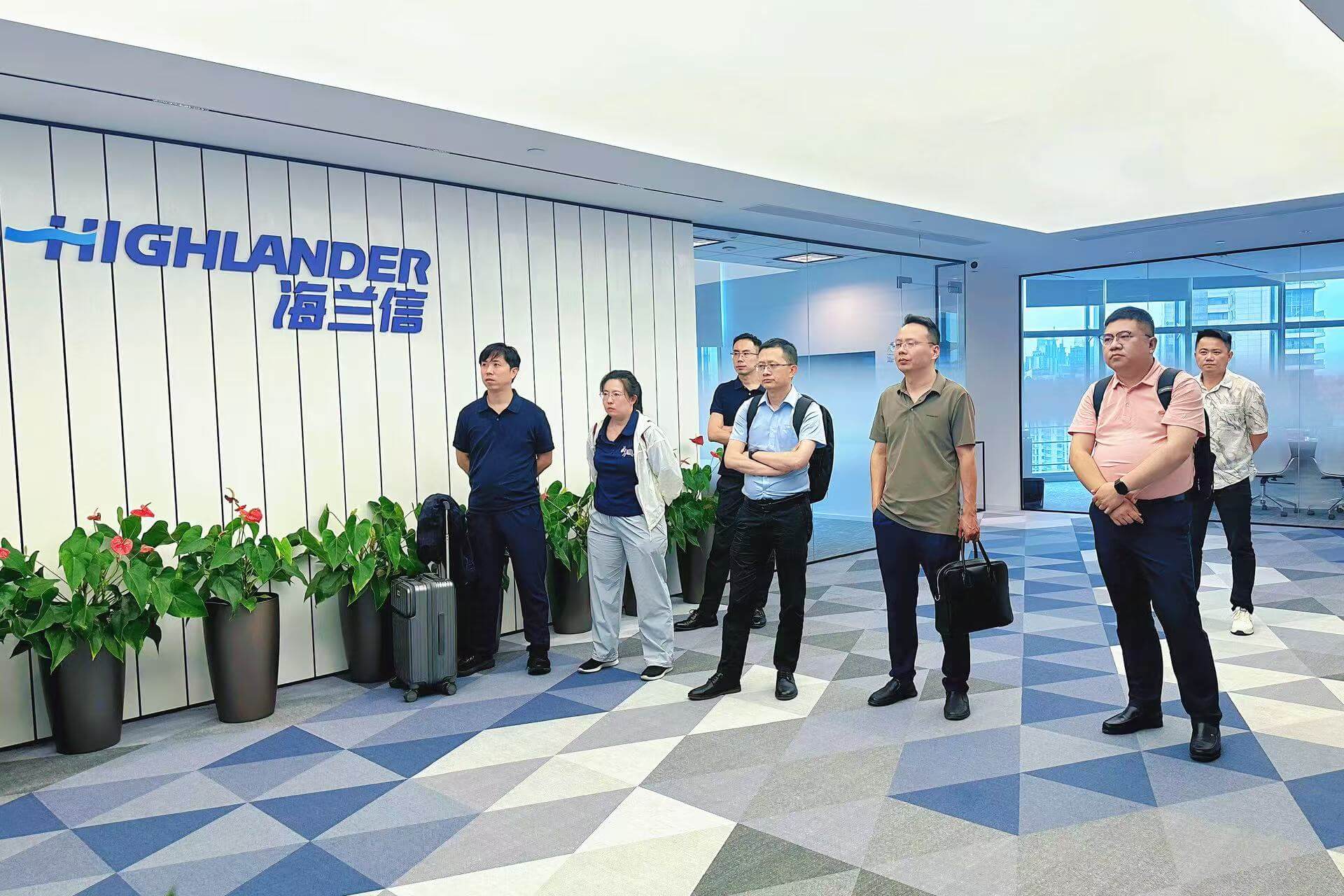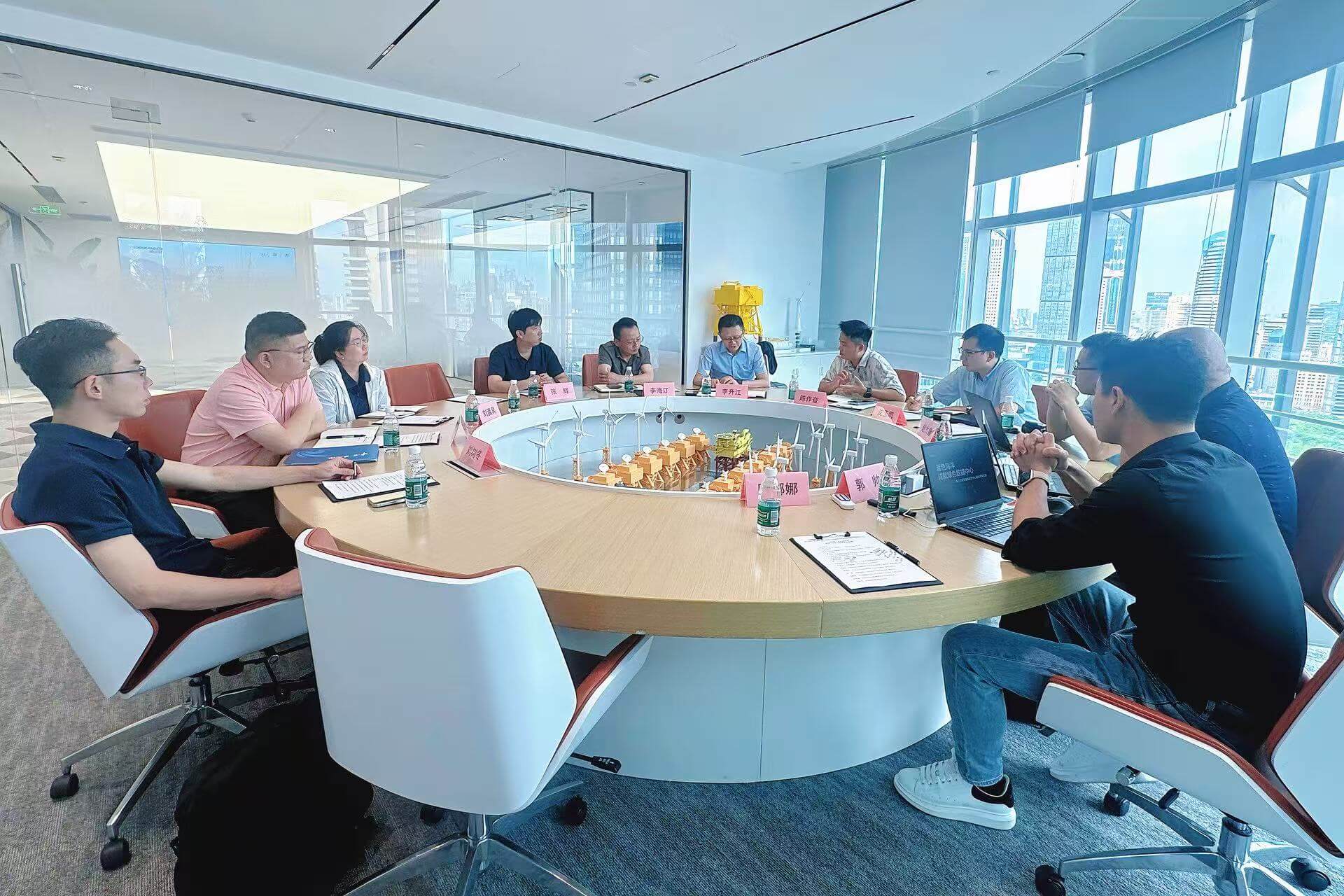

On the afternoon of July 30, Li Shengjiang, Deputy Chief Economist of the China Association of the National Shipbuilding Industry (CANSI), led a delegation to visit Highlander for an on-site research tour. Core business leaders from Highlander Group's Maritime Systems Business Division and Shanghai Hailanyun Technology Co., Ltd. attended the symposium. The two sides engaged in an open exchange on broad industry trends, examined pressing challenges across the sector, and jointly explored strategies for the high-quality development of domestically produced marine equipment.

During the symposium, leaders from each of Highlander's business segments delivered a well-structured, progressively detailed presentation on the company's strategic development and core technological capabilities. The Maritime Systems Business Division, anchored in its core business of intelligent navigation, outlined the Group's long-term development strategy and comprehensive technology framework, highlighting four key advantages: self-reliance and controllability in navigation equipment, integrated onboard communication services, iterative upgrades in engine room automation, and leadership in intelligent vessel systems. The Division recounted years of tackling formidable challenges and striving for excellence to achieve self-sufficiency in core maritime hardware and software, free from external constraints. Shanghai Hailanyun, focusing on the emerging field of smart ocean, provided a detailed exposition of its Underwater Data Center (UDC) innovative business, analyzing it across six dimensions—industry opportunities, technological iteration, performance advantages, frontier innovation, long-term planning, and industrial value—to paint a comprehensive blueprint of deep-sea digital infrastructure empowering the marine economy.
The discussion session directly addressed industry pain points, with both sides engaging in candid exchanges of views. In-depth discussions centered on prominent bottlenecks facing the ship communication and navigation industry, including the widening supply gap, abnormal price hikes of imported equipment, and dependence on foreign sources for critical components. The participants systematically examined latent risks hidden within the industrial and supply chains. They also assessed, from the perspective of the industry's long-term development, key issues such as vessel data and information security, stable operation of the shipbuilding industry, and breakthroughs in domestically produced supporting equipment. Through collaborative brainstorming, the two sides explored viable pathways to overcome difficulties and strengthen the industry's foundation, reaching consensus on multiple fronts.
Deputy Chief Economist Li Shengjiang expressed recognition of Highlander's products and business operations, stating that the industry association will fully leverage its role as a bridge and link, working to identify industry bottlenecks, map market demand, and facilitate the alignment of industry resources to promote the high-quality development of the shipbuilding industry.

Looking ahead, the two sides will continue to deepen their regular collaborative engagement, leveraging practical industrial efforts and technological breakthroughs to help propel China's transformation from a major shipbuilding nation to a shipbuilding powerhouse, and to contribute a solid and forceful industry response to the cultivation of new productive forces in the shipping sector and the comprehensive advancement of building a maritime power.