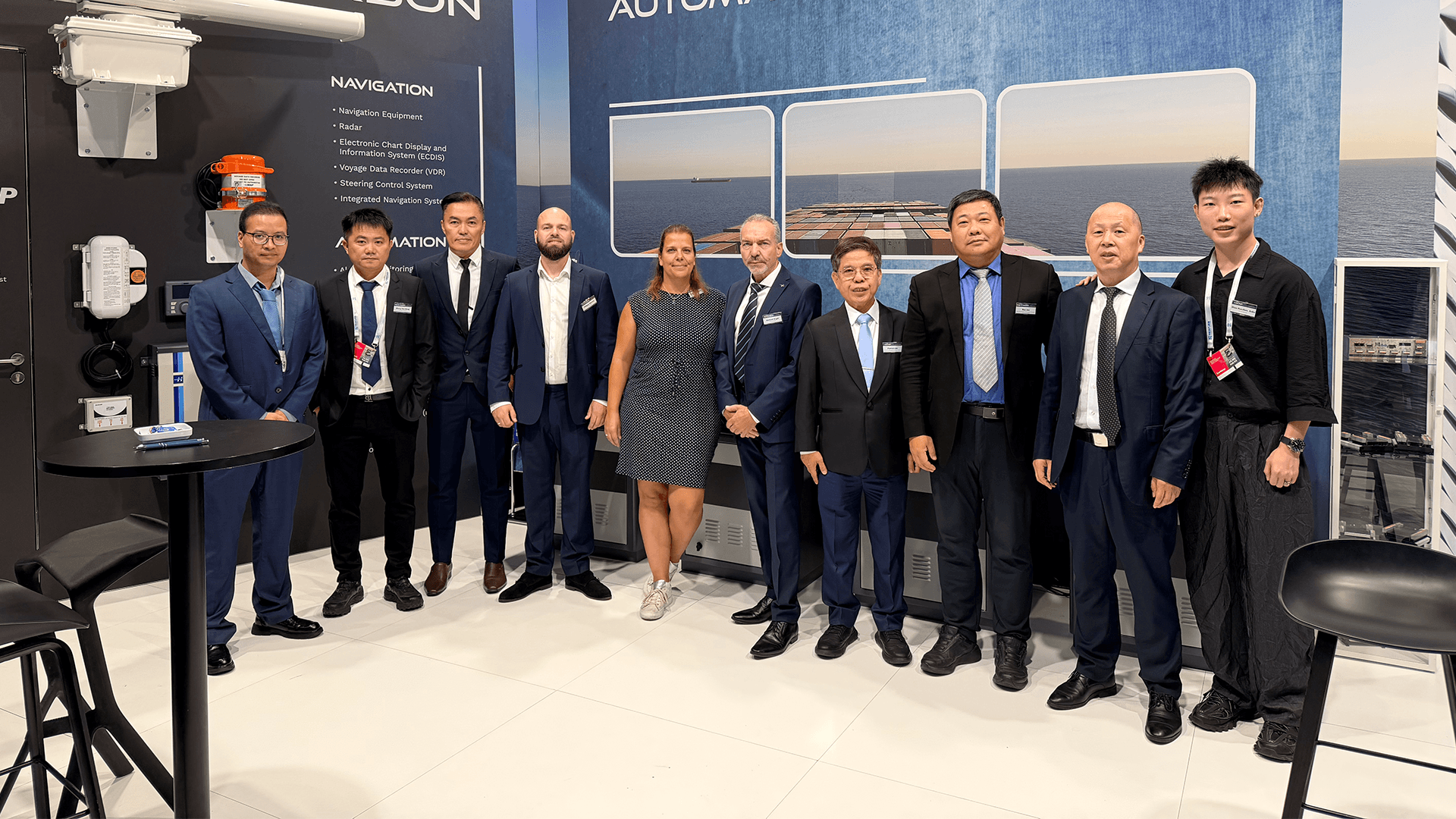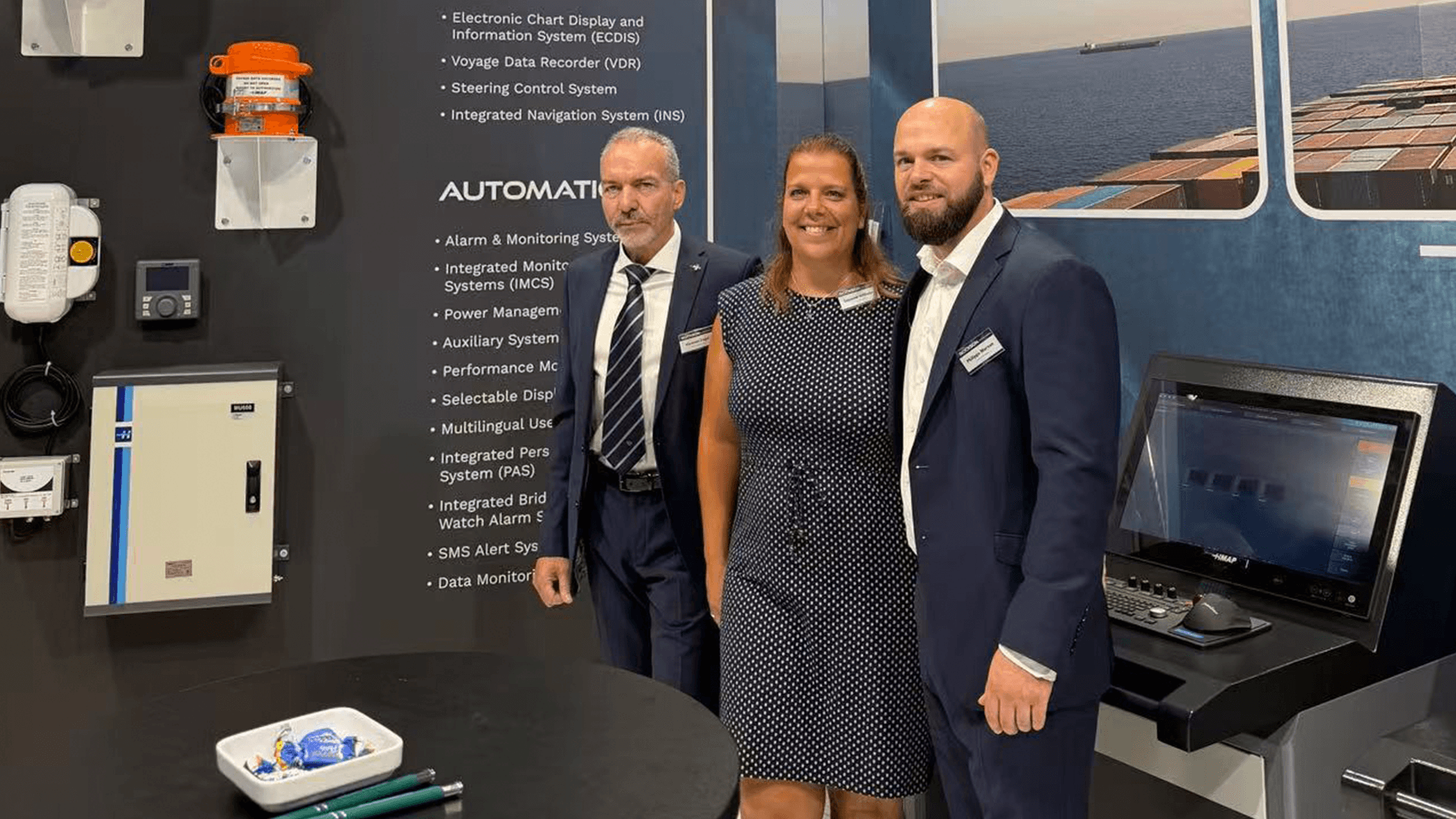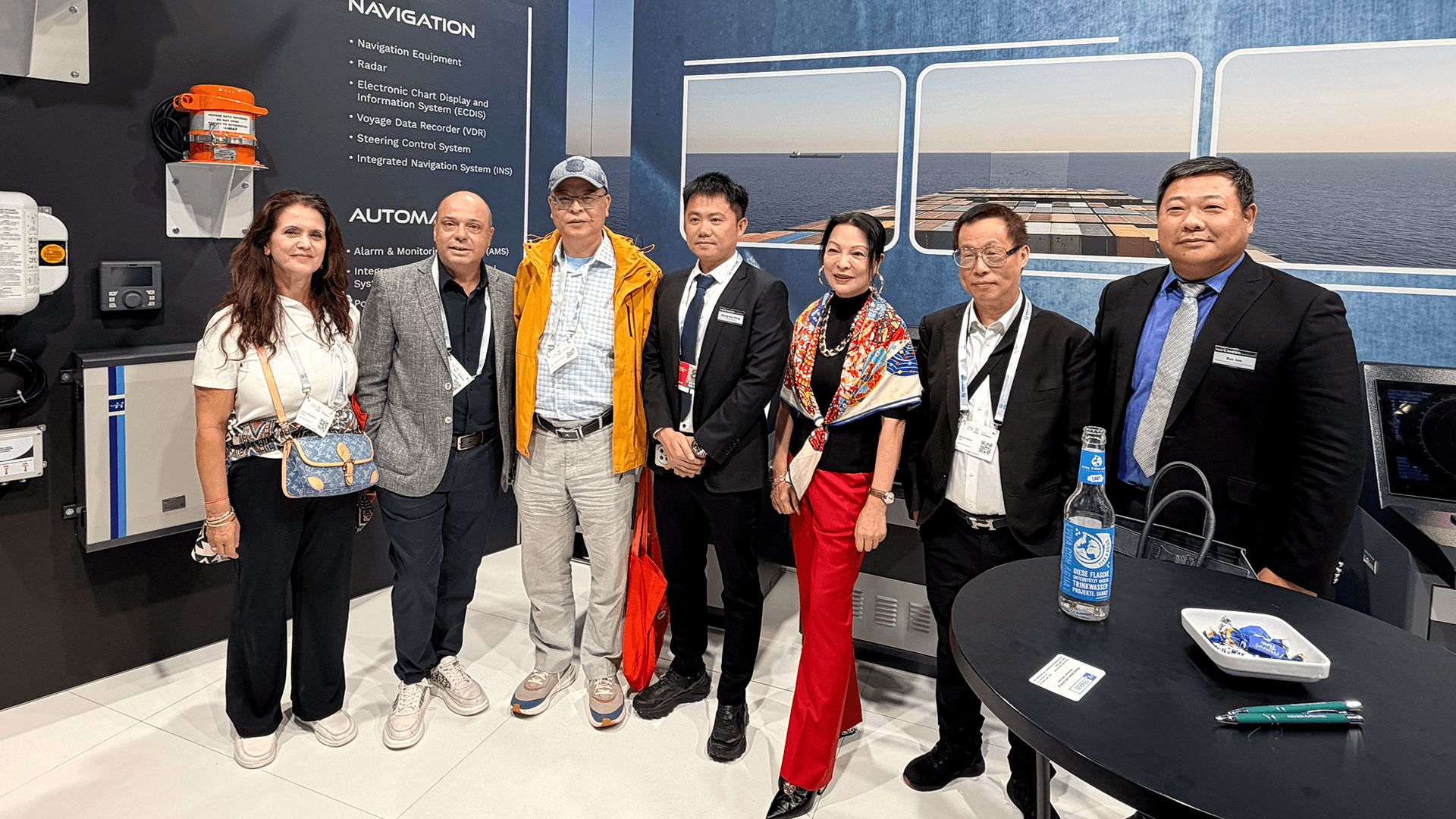

From September 1 to 4, 2026, the 32nd SMM Hamburg International Maritime Exhibition was held in Hamburg, Germany. Under the theme "Driving the Maritime Transition," the event welcomed more than 50,000 visitors for the first time and around 2,300 exhibitors — both record highs — and introduced a dedicated Maritime Defence Pavilion for the first time. Four central threads ran through the entire show: maritime security and defence, green decarbonization, digital intelligence, and supply chain resilience. Highlander appeared at Stand 207, Hall B6 together with its overseas brand Rockson under the theme "Automation & Navigation," bringing China's intelligent manufacturing in navigation and automation to European shipowners.

Two Brands, One Stage: Navigation and Automation Building an Ecosystem Together
At this year's show, the industry's competitive focus is shifting from "standalone equipment" to "integrated systems" — radar, ECDIS, VDR and AMS are now all measured within a single bridge ecosystem. Solid-state radar has entered its phase of large-scale deployment; GNSS anti-jamming and cybersecurity have become the new standard; AI collision avoidance and decision support are accelerating their way aboard. Competition increasingly tests a company's ability to integrate systems and ecosystems. Green and intelligent are becoming the main themes of the global maritime industry. Driven by policies such as carbon taxes, the value of intelligent technology ultimately comes down to serving decarbonization and efficiency gains. And as hardware matures, "software-defined ships" are becoming the new competitive high ground.

At Stand B6.207, Highlander and Rockson shared the stage as two brands, answering with two core product lines. The first is the SmartBridge Integrated Navigation System (INS), built on a unified data foundation that moves the bridge from "many screens" to "one situational picture." The second is the fifth-generation AMS Evolution V5 engine room automation and monitoring system, which uses a three-tier distributed architecture of "HMI + programmable controller + I/O acquisition" to cover six major functional domains, including engine room monitoring and alarms, auxiliary machinery control, and ballast water and liquid cargo management.
One channel handles "seeing"; the other handles "controlling." Navigation and automation run in parallel, yet share the same ship data environment — precisely the "connected ship architecture" that recurred throughout this year's show.
What underpins the delivery of this ecosystem is an already established global service network: Singapore, Scandinavia, China (including the Taiwan region of China), Panama, the United States... From equipment installation and commissioning to periodic inspection and maintenance to emergency response, every device installed on board feeds data back through the service platform. With service as the connective tissue and data as the underpinning, Highlander provides global customers with end-to-end, full-lifecycle assurance.
Engaging Global Shipowners: Service Emerges as the Common Ground
Over the four days of the show, business meetings at the Highlander booth remained consistently intense. Visitors spanned five categories — shipowners, ship management companies, shipyards, service providers and distributors — and discussions centered on three areas: equipment selection for newbuild and retrofit projects, spares and after-sales service, and product certification and classification society approval. Customer concerns also converged markedly: price, reliability, delivery lead times, certification credentials, technical support and spares availability.

Drawing on Rockson's channel resources among European shipowners, Highlander's navigation and automation solutions were effectively validated, and the company made contact with a new group of prospective agents from Türkiye, Africa, Spain and other regions, while continuing to receive fleet-level product inquiries. Practice has once again confirmed: in overseas markets, the depth of a service network often determines how far a brand can go. Over 25 years, we have witnessed too many shifts "from watching to trusting" — from simple buyer and seller to strategic partners walking side by side. Service is more than after-sales; it is a commitment to growing together with our customers.
At this year's show, about 200 Chinese companies exhibited, retaining China's position as the largest international source of exhibitors. China's exhibition model is moving from "going global by building ships" toward "going global across the entire chain" — Chinese intelligent manufacturing is taking part in the global maritime transformation at ever greater depth.

Second from left: Mr. Banos, President of Greece's Akron Group. Third from right: Ms. Jennifer Zhang (Zhang Hong), General Manager, China, Marine Products Division, Bureau Veritas (BV), France.
The Curtain Falls, but the Show Goes On: Charting a New Blueprint for a Smart Ocean
As competition moves from "standalone equipment" to "integrated systems," the industry's evolutionary path is clear: standalone equipment → connected systems → ship data integration → decision support → intelligent operations → progressive autonomy. This is precisely Highlander's strategic through-line: to grow from a maker of standalone navigation products into a supplier of integrated navigation and situational awareness.
Our confidence comes from 25 years of industry accumulation — having moved from catching up to standing shoulder to shoulder, China's intelligent manufacturing now has what it takes to compete on the same stage as the world's top brands, backed by customer trust and a service network spanning the globe, and by a highly youthful, highly international team. Our direction rests on two main lines: resolute internationalization — stepping out proactively, staying close to customers, and deepening and solidifying the service network; and steadfast innovation — honing our products on the principle of "hardware right the first time, software continuously iterating." As early as two years ago, we laid out a forward-looking roadmap for solid-state radar. Today, as AI and radar converge at an accelerating pace, building on achievements such as AI collision avoidance assistance and AI visual situational awareness, we are steering "China's solution" toward broader international markets.
SMM 2026 has come to a close, but Highlander's global voyage has only just begun. See you in Hamburg in two years!