Solid-State Leadership, Vision Across All Waters | Highlander Solid-State Radar Product Promotion Conference Successfully Held in Shanghai
On October 13, Highlander held its solid-state radar product promotion conference in Shanghai. The event brought together industry representatives from shipping owners, ship management companies, ship design institutes, and marine engineering associations. Through keynote presentations, a roundtable forum, and in-depth technical discussions, the conference focused on the pain points of domestic substitution for marine communication and navigation equipment, and facilitated exchanges on the iteration of fully solid-state radar technology, retrofitting for in-service vessels, and the global service support system — jointly exploring viable paths for the domestic replacement of core shipboard sensing equipment.
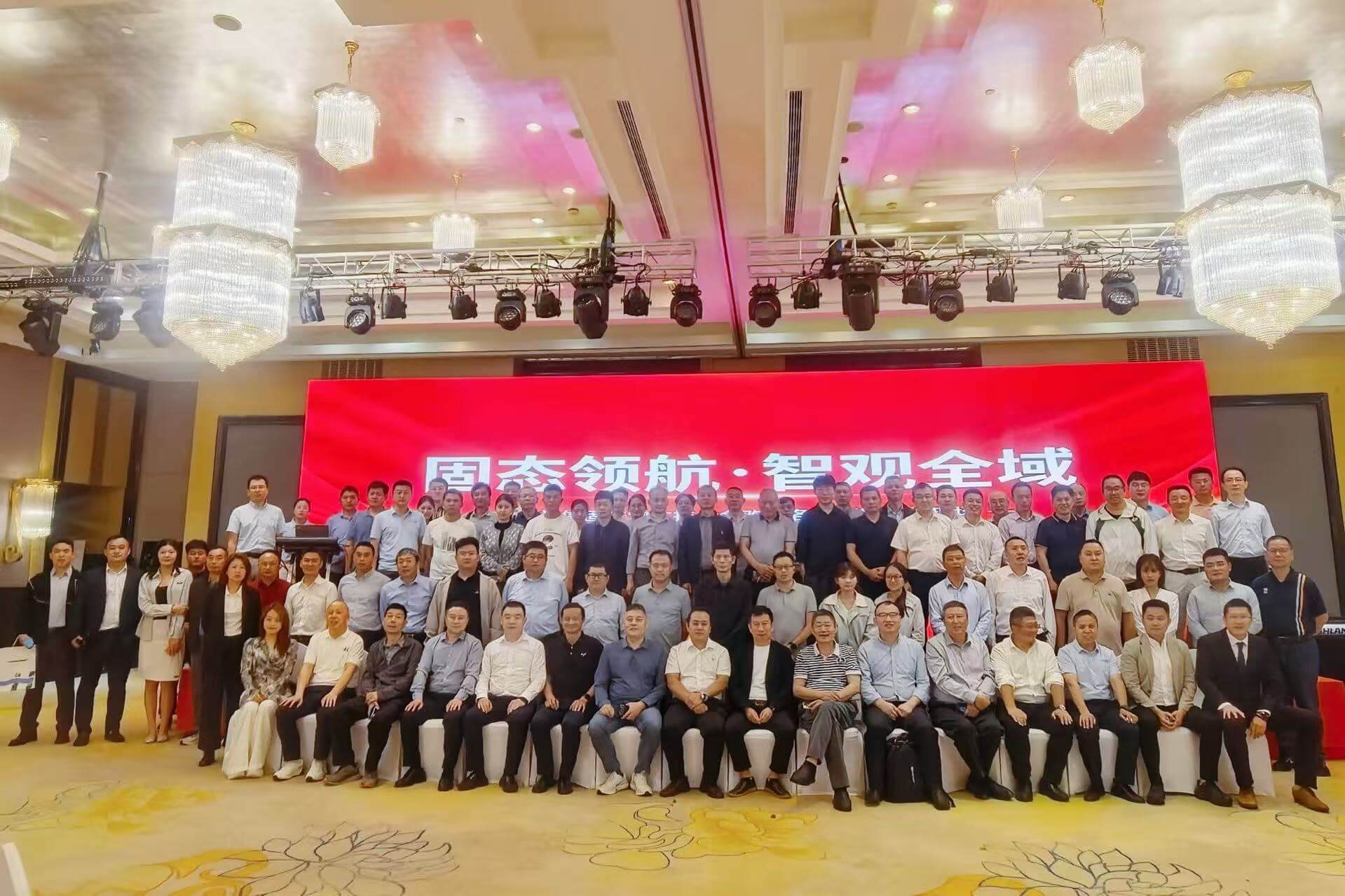
01 | Industry Background: Domestic Substitution Has Become a Real Necessity
Marine communication and navigation radar is core equipment for ensuring navigational safety. While China currently holds the world's largest shipbuilding industry, critical safety-related equipment such as marine communication and navigation systems has long been monopolized by overseas brands. Constrained by practical issues such as lengthy delivery times for imported equipment, high spare-part costs, and delayed overseas after-sales response, domestic substitution of communication and navigation equipment has shifted from an optional industry direction to a genuine necessity for the high-quality development of the shipping industry.
02 | Roundtable Forum: Three Thresholds to Scaled Deployment
The conference featured a dedicated roundtable forum, where guests from four sectors — industry associations, shipowner engineering departments, technology R&D, and market services — engaged in dialogue from multiple perspectives, including macro industry trends, frontline engineering operations, solid-state radar technological breakthroughs, and end-to-end deployment support. The panelists noted that for domestic communication and navigation equipment to achieve true scaled deployment, it must cross three thresholds: stability, reliability assurance ("bottom-line" fallback capability), and trust. The goal is not simply to replace imported products with lower-priced alternatives, but to achieve comprehensive substitution across technology, service, reputation, and full-lifecycle value.
03 | Product Overview: The Technical Advantages of the HLD-RADAR 900S
During the technical session, Highlander experts highlighted the core technical advantages of the HLD-RADAR 900S fully solid-state marine navigation radar. The product employs third-generation GaN (gallium nitride) solid-state transmission technology, completely eliminating consumable components such as the magnetrons used in traditional radars, and delivers outstanding small-target detection capability under complex sea conditions such as heavy rain and strong sea clutter. The core module of the equipment is designed for a service life of up to 80,000 hours, with virtually no need to replace consumable parts — significantly reducing crew maintenance workload and full-lifecycle costs. Available in both X-band and S-band models, the product has obtained certification from the China Classification Society (CCS). Its external interfaces are compatible with mainstream imported radars; retrofitting older vessels requires only the replacement of composite cables, and a future adapter plate compatible with imported radar pedestals will further minimize retrofit construction work — making it suitable for diverse scenarios including newbuilds and upgrades to existing fleets. The equipment also integrates intelligent functions such as automatic clutter suppression and automatic plotting and tracking, and can be deeply integrated with electronic charts (ECDIS), the Automatic Identification System (AIS), and intelligent ship navigation systems, aligning with the trend toward smart vessels.
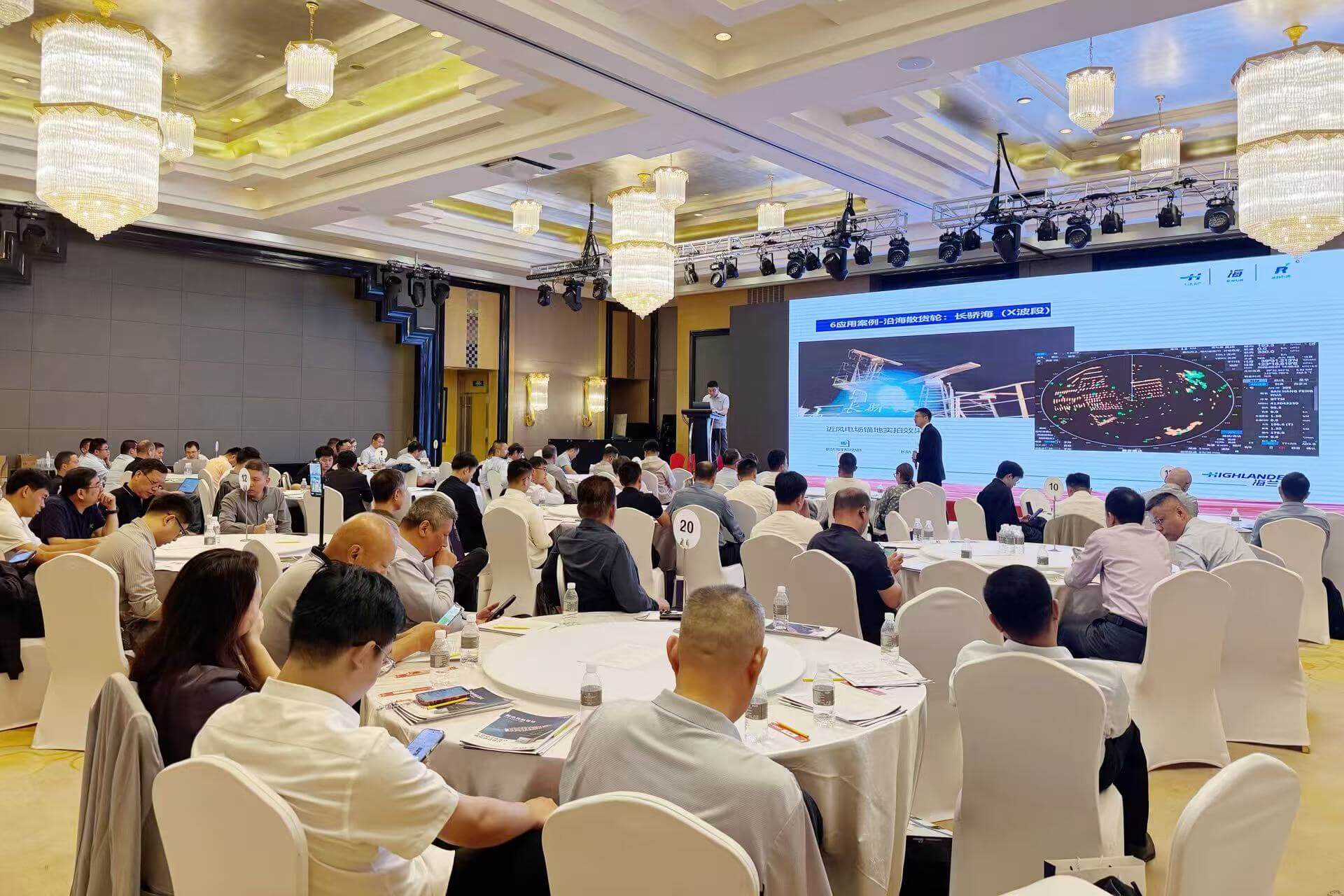
04 | Service Assurance: Technology Opens the Door; Service Wins the Game
"Technology is the foundation for entering the market; service is the key to breaking through." At the forum, Highlander placed particular emphasis on its global service support system. Domestically, the company has established 65 partner agencies covering China's major ports; overseas, it has built more than 150 service outlets, with spare-parts warehouses in Panama, Brazil, Germany, Singapore, and the Middle East, and plans to expand into South Africa, North America, and Australia. The company has established a 7×24 cross-time-zone fault response mechanism, prioritizing remote diagnosis, with on-site resolution of major faults guaranteed within 72 hours. Its digital service platform enables end-to-end online management of vessel profiles, one-click repair requests, work-order tracking, and equipment health alerts, complemented by a multilingual AI maintenance assistant that provides continuous technical support for vessels sailing worldwide. It was also disclosed at the conference that the company plans to establish a Singapore service company within 2026 to further strengthen its overseas repair and technical training capabilities.
05 | On-Site Feedback and Future Plans
Attending design institutes and shipowner representatives also offered product optimization suggestions based on real-world vessel usage scenarios, including improving package supply of complete communication and navigation systems, optimizing retrofit accessory kits, and enhancing modular fault-troubleshooting capabilities. Highlander stated that these requirements have already been incorporated into its product iteration plans.
Solid-state radar is an important entry point for Highlander into the high-end marine communication and navigation market. Drawing on years of technological accumulation in the maritime field, the company has built a complete product portfolio spanning navigation systems, monitoring and alarm systems, and intelligent integrated systems, and has delivered multiple benchmark projects both in China and abroad. Going forward, the company will establish a dedicated radar research institute, continue to tackle frontier technologies such as AI radar and shipboard edge computing, participate in international standard proposals related to intelligent radar, complete its product capabilities in the communication and navigation segment, and build a comprehensive communication and navigation system solution.
Industry guests noted that domestic substitution of marine communication and navigation equipment requires the joint efforts of enterprises deepening their technology, shipowners conducting real-vessel validation, and industry platforms driving progress. This Shanghai promotion conference created an effective platform for connecting supply and demand, allowing shipowners and engineering personnel to gain a more direct understanding of the technical strength and service capabilities of domestic solid-state radar. Looking ahead, Highlander will continue to refine its products and services, using independently controllable maritime equipment to support the safe and high-quality development of China's shipping industry.